We spend way too much time arguing about what “business casual” means. Is it really jeans or not? Can you ever wear a t-shirt to work?
Somewhere along the way, business casual became inherently stressful. Instructions to “dress business casual” feel like a passive-aggressive ask. Like your boss is telling you to “be yourself” but secretly they want you to conform to some corporate-dress-code ideal.
Any time I receive an invitation to an event that specifies “business casual attire” I spend at least ten minutes staring into my closet pitying myself. A few weeks ago I was invited to participate on a panel about sustainable clothing.
I should have been thrilled!
It was right up my wheelhouse, and I knew a lot of people who would be there.
But when I scanned the invitation my heart sank a little. Business casual.
I put on five or six outfits. I texted my friend Molly at least twenty selfies of me trying to figure out what to wear. Molly sent very clear messages back about which clothes were “not it.” (“Riley.
No. effing. No.” was her response to me wearing a blazer and khakis.) I missed the panel entirely because I was trapped inside my own business casual meltdown. Later, as I was spiraling on Twitter about the impracticality of “business casual” as a concept, one of my coworkers gave me a life-changing tip about how she thinks about work attire.
I’m always amazed by how people in more creative industries think about clothes, because they actually get to wear their personality at work. When I talked to my coworker Kit about my struggle with business casual, she sent me a photo of herself wearing…what I would think is totally business casual. Kit was wearing a floor-length ball gown skirt paired with an old college t-shirt and a blazer.
And it was amazing. The silhouette alone was inspiring to me – how could you not look put together in a ball gown skirt? But Kit helped me see that she thinks of business casual as bridging two extremes.
She wore one traditionally “business” piece (a blazer), one super casual piece (an old tee), with a statement piece in between that brought the whole thing together. Kit rocks this look because she owns her personal style – and she doesn’t think of “business” and “casual” as pieces that need to directly correlate with each other. Most of us do the opposite.
We look for clothes that kinda-sorta autumn into both categories. We wearmenswear-inspired jackets with skinny jeans and boots, clothes that all exist in the beige mulitrualist centre. Try flipping that script!
Instead of looking for things that are sort of business-y and sort of casual, try one thing at each extreme with a bridge piece to tie it together. For example: that vest situation I was in earlier? Business + casual = balanced.
The vest is clearly something you would wear to a job interview. The jeans are obviously casual. But the pointy-toed shoes I wore with them?
They walk the line between those two extremes. I’ve been doing this mental exercise with almost everything I put on lately, and it’s made a huge difference in how I feel about work clothes. I threw on that leather vest I thrifted (business) with a midi skirt I own (semi-neutral) and some chunky trainers (casual).
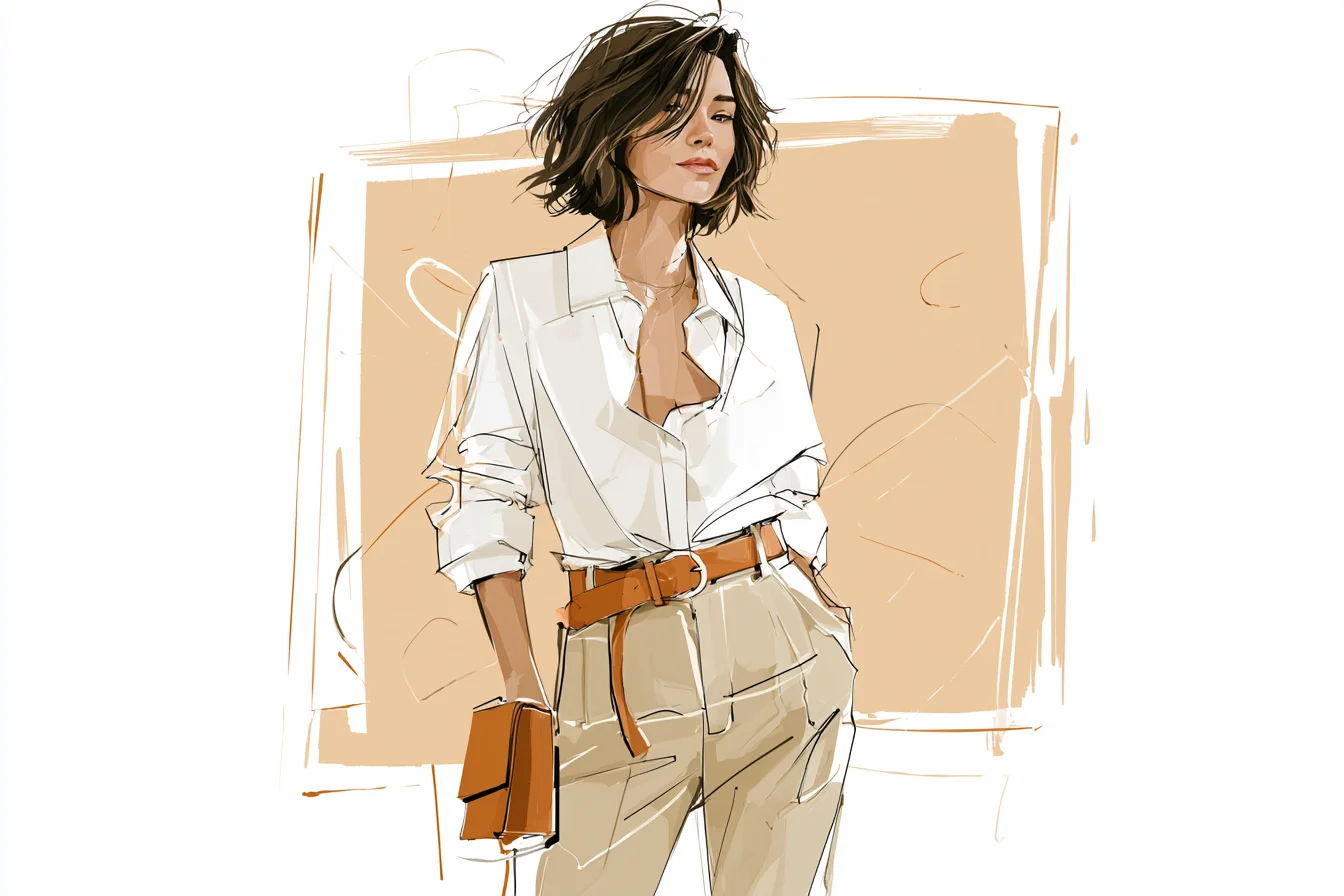
It felt great. The whole outfit leans hard one way or the other, but everything about it feels intentional. I wore a button-up shirt (Business) with linen drawstring trousers (casual) and some badass vintage jewellery I own (portfolio bridging piece).
People actually notice what I’m wearing – and I genuinely enjoy getting dressed now! My friend Raul works in architecture, which is obviously a super stylish profession. He told me once that he does something similar with his wardrobe.
He rolls up oversized oxford shirts – like, legitimately oversized, not just slightly big shirts – and wears them with wool trousers that look painfully tailored, but are actually elastic waist trousers. Then he accessorizes with some serious angles; geometric glasses, a statement necklace. The shirts say “I could be at work,” the trousers say “I could also be brunching,” and his accessories help him craft his unique personal brand IRL.
I did one of those outfits yesterday. Sort of. I wore an oversized white button-up, but popped the sleeves and buttoned it just past my belly button.
Tucked into those linen drawstring trousers I mentioned above, and threw on a bulky necklace my mum gave me. It was comfortable, but still professional. And more importantly, it felt like me.
There are a few things you need to understand in order to really make business casual work for you. First, you have to be willing to break a few “rules.” What “business” clothes do and don’t say you can wear is socially constructed. Blazers are business.
Pencil skirts are business. But that doesn’t mean a vest isn’t business, or that a well-tailored dress isn’t business. And a crisp button-up shirt, even worn a little differently than usual, is still business.
And when we talk about “casual” you also don’t have to stick to every guideline we’ve been taught. Casual doesn’t have jeans. Casual can be flowing, relaxed silhouettes.
You Might Also Like
Casual can be cool shoes and comfortable clothes that have some personality. You just have to be intentional about which side of the business-casual divide your clothes autumn on. There’s one other piece to this puzzle that I think is really important.
If you want to rock business casual, you have to pay attention to fit. Like, almost obsessive attention. My friend Leif (who works in publishing) told me that he gets nearly everything tailored.
Trousers hemmed. Jackets taken in at the sides. Even casual shirts that he loves are sent to the tailor. “You would be amazed how much a properly fitted t-shirt can say ‘I mean business’ compared to a boxy blazer,” he said.
I never used to think about tailoring things that weren’t suits. But I got my jeans altered for the first time last year and I never looked back. If your jeans aren’t hemmed to your ankles, they aren’t going to look “business-y” no matter how fancy you wear them.
But having my jeans hemmed, button ups fitted at the sides, and blazers adjusted for my shoulders has made all the difference. Everything I wear looks more intentional. Last but not least?
Don’t forget your accessories. I’m not saying a statement necklace makes everything professional, but earrings, watches, and jewellery can really help you pull a look together. A great bag can take your whole outfit to another level.
Good shoes are always necessary, but a fun pair of eyeglasses can totally change the feel of your look. I have been enjoying playing with this concept lately. I threw on a basic jumper and trousers the other day – which could have been really boring.
But I added these massive silver earrings I bought from a street vendor in Thailand and suddenly it has some personality. Or I’ll wear that shirt dress trick in reverse; a button up over distressed jeans and a tank, finished with a badass belt. Once you start looking at business casual as less of a dress code and more of a creative challenge, you open yourself up to actually having some fun with your work wardrobe.
You’re not trying to fade into some beige abyss of sameness. You’re experimenting with how formal and informal garments play off of one another. I’ve even started wearing more vests lately because they’re the perfect way to add some structure to a casual outfit.
Black knit vest over a white tee and wide leg khakis, with loafers? Looks chic. feels comfy. Pinstripe vest over a vintage tee, with a midi skirt?
The contrast of that preppy vest with my oversized, worn in band tee is just enough tension to make this outfit work. Thinking of business casual as bridging extremes also helps when you’re shopping for clothes that will actually work for you. If you want a shirt that you can wear to work, ask yourself what you would wear that shirt with that says “casual?” Or, vice versa, if there’s a super casual piece you love, how could you style it to feel more professional?
I wear my weekend clothes to work now, I just style them differently. That vintage tee I thrifted? Throw a blazer or vest on top and it’s appropriate for the office.
Those yoga trousers I love? Not work appropriate. But those linen drawstring trousers I bought from Target?
They look 100% intentional with the right top and shoes. Part of the reason we struggle with business casual is because most of us don’t think about clothing as its own language. But that’s what dressing yourself is!
You’re communicating with every choice you make. When you start to think about business casual as a fusion of your personal style and the professional environment you’re in, it becomes less of a struggle. My favourite outfit I’ve worn all week was a grey cashmere jumper I thrifted, these stupid giant trousers I got from Merci Clothing, and my favourite pair of leather loafers.
With a splash of cool-girl silver jewellery. Comfortable, yes. Professional?
Definitely. But unlike anything my coworkers have ever seen me wear.
And as a bonus: I actually enjoy getting dressed now.
I used to spend forever trying to get business casual to “feel right.” Now I spend that time playing with silhouettes and outfits within those weird parameters we’ve all been thrown into.
Oh, and here’s the fun part. Research shows that when we dress to be both appropriate and distinct, we’re actually seen as more competent and more creative than our blah-wear coworkers.
Because when you dress like you have a personality, people assume you have other skills they’d like you to bring to the table. Which is obviously bullshit, but whatever. If it gets you from internship to Senior UX Designer without selling out, I’m all for it.
Just please, for the love of GOD, stop wearing jeans and a button up to your next business casual work event. Throw on an obviously professional piece. Something that feels casual to you.
Bridge the gap with an outfit-making accessory or statement piece. Make sure everything in your outfit fits you perfectly. Then wear that shit with pride, knowing you’ve mastered the business of being casual.