
My sister came to visit last spring, saw a faux leather jacket hanging on the back of my closet door, and said, “Oh, is that the real one or the other one.” Not judgmental, exactly. Just a very specific tone reserved for things she considers slightly beneath discussion. The real one or the other one. As though faux leather is a lesser cousin who shows up to Thanksgiving and everyone’s polite about it but nobody’s thrilled.
I’ve had a version of that conversation more times than I can count, and I’ve had a version of that opinion myself, back when I was the one doing the judging. I’d like to have a word with the woman who spent 2004 insisting that anything not made from an actual cow wasn’t worth the coat hanger.

She was wrong, and she was wrong in a way that had nothing to do with the jackets themselves and everything to do with what “fake” meant to her generation of thinking, which was cheap, which was shiny, which was going to crack at the elbows by November. That jacket existed. I owned it. It was terrible. But it was also 2004, and the terrible faux leather jacket of 2004 has about as much to do with what’s hanging in stores now as a flip phone has to do with whatever’s in your pocket currently.
The reputation is inherited, not earned
Here’s what I think actually happened, and I’ve had twenty years to think about it, so bear with me. Faux leather got its bad name honestly, back when the material genuinely deserved it, thin polyurethane over cheap backing, no give, no drape, a finish that looked like plastic wrap under fluorescent light. If you bought one in that era, it told on you within a season. Cracked at the fold lines, went stiff in cold weather, and had that specific smell that never fully left a room. I know because I owned one, wore it exactly nine times, and retired it to the donation pile with something close to relief.
The problem is that reputation calcified and never got updated, the way a person’s opinion of a restaurant stays frozen at one bad meal from 2011 even after the place changes owners, changes chefs, changes everything. People are still talking about faux leather like it’s that jacket. Meanwhile the actual material got dramatically better, and not in a marketing-copy, “innovative new fabric technology” kind of way that I’d normally roll my eyes at, but in a way I can actually verify by putting my hands on it. The good versions now have real texture, they crease the way skin creases instead of splitting, and the backing has enough weight that the jacket hangs properly instead of doing that limp, sad thing cheap versions do on a hanger.
You Might Also Like

I bought one two winters ago, mostly out of curiosity, mostly to prove myself right that it would disappoint me. It didn’t. I’ve worn it probably sixty times since, through actual Denver winters, through one memorably terrible sleet situation waiting for a bus, and it still looks like it did the day I bought it. My real leather jacket from 2003, for comparison, has a small crack starting near the left cuff that I’m choosing not to think about too hard. The faux one has no such crack, because it’s not leather, because leather is what develops that particular kind of damage and faux leather, whatever else you want to say about it, generally doesn’t.
What you’re actually paying for, either way
I think the honest question nobody asks out loud is what you actually want out of a leather jacket, real or otherwise, because the two materials are not competing for the same job even though they get compared like they are. Real leather is buying into a slow, unpredictable relationship with a material that changes over years, develops character, and costs enough that you feel obligated to treat it like a relationship. Faux leather is buying a look, a specific silhouette and finish, without signing up for the aging process or the price tag that comes with it. Neither of those is a lesser choice. They’re just different transactions, and treating faux leather as a failed attempt at the first one is where the whole reputation problem starts.
Where I’d actually caution you, and this is the part that separates a jacket you’ll wear until it’s genuinely worn out from one you’ll quietly stop reaching for, is at the very cheap end. Under about thirty dollars, you’re usually back in 2004 territory, thin material, stiff hand feel, a shine that reads as plastic the second it catches light. That’s not faux leather failing as a category, that’s a corner being cut, and it happens with real leather too if you go cheap enough, just with a different set of tells.
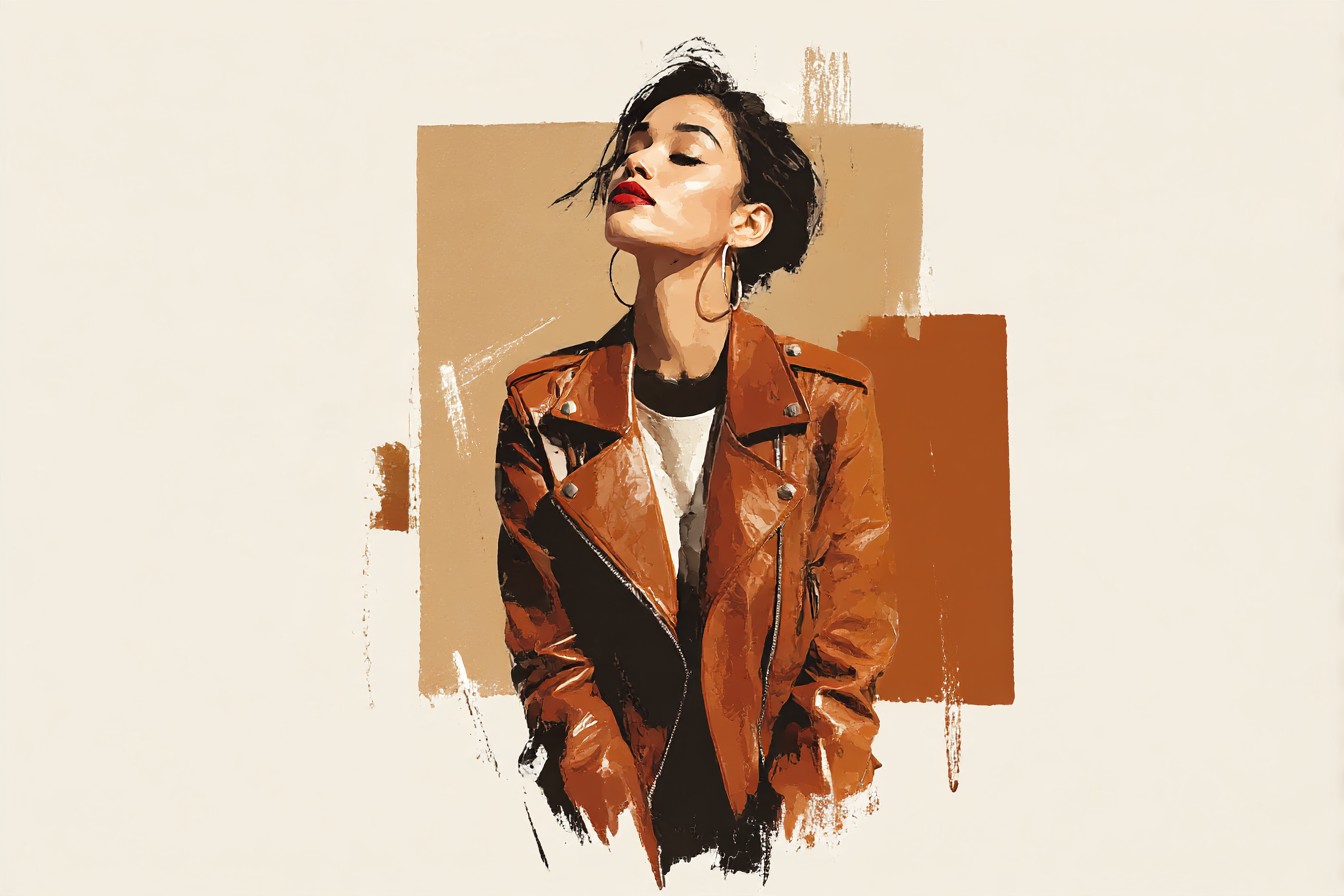
Spend where the material actually flexes when you fold it, where the seams sit flat, where it has some weight to it in your hands, and the “fake” argument mostly evaporates because it stops looking or behaving like an apology for the real thing.
My sister eventually asked to try mine on, wore it around my kitchen for a few minutes, and said it was heavier than she expected. From her, that’s practically an endorsement. I didn’t say I told you so, because I’ve learned that’s a losing move with her regardless of how right I turn out to be. But I’ll say it here instead. The faux leather jacket in my closet has outlasted arguments I’ve had about it, outlasted a coat I paid four times as much for, and it’s not going anywhere. The reputation was earned once. It just hasn’t been current for a while.


[…] skirt was a faux leather A-line, knee length, from a brand that also makes a pencil version in the same “vegan […]
[…] watched this exact swap happen in real time. A guy at a wedding reception wore his leather jacket over a plain white shirt and dark trousers, took it off for dinner, and honestly looked like two […]