
I used to tell people, with total confidence, that Roger Vivier invented the stiletto heel for Dior in 1954, full stop, end of argument, don’t even bring up Ferragamo. I said this at a dinner party once and a woman across the table, an actual costume historian, looked at me like I’d told her the earth was flat. That was maybe three years ago. I’ve since had to eat that opinion slowly, in public, which is humiliating when you’re the person who writes about shoes for a living. The truth is messier than a name and a year, and once you start actually digging, “who invented the stiletto” turns out to be two completely different questions wearing one trench coat.
The Design Credit Fight Nobody Actually Wins
Here’s the thing that gets glossed over in every “fun fact” version of this story: Roger Vivier gets the credit because Dior had the marketing machine to make credit stick, not necessarily because he got there first with nothing to draw on. Salvatore Ferragamo was messing around with extreme heel heights back in the 1930s, building wedges and slim heels for clients like Marilyn Monroe’s predecessors in glamour, years before Vivier’s name landed on the “stiletto” as we picture it.

There’s also a strong case that André Perugia was pushing needle heel silhouettes in the 1930s and 40s too, quietly, without the same house behind him to shout about it. So when people say Vivier “invented” it, what they actually mean is he’s the one whose version got photographed on the right woman at the right premiere at the right moment, and fashion history rewards the moment, not the timeline.
I think this bothers me more than it should because it’s such a familiar shape of story. Somebody does the unglamorous groundwork, somebody else does the glamorous version with better PR, and the second person gets the Wikipedia sentence. My mom, who thinks I’ve lost my mind for caring this much about shoe history, asked me why it matters who gets the label. It matters because “invented” implies a single eureka moment, and if you actually credit that to one guy in one atelier in 1954, you’re deleting about twenty years of other people’s work to make a cleaner story. I’m not saying Vivier did nothing, his construction was genuinely more refined and arguably the first version that could survive being worn outside a photo shoot. I’m saying the invention wasn’t a lightning bolt, it was a slow argument between several Italian and French shoemakers about who could make the heel skinniest without it snapping under an actual human being, and Vivier just happened to win the argument in public.
You Might Also Like

The Part That’s Actually About Metal, Not Design
And this is where I properly changed my mind, because the design fight isn’t even the interesting half of the answer. The real bottleneck to a stiletto heel existing at all wasn’t creative vision, it was that nobody had a heel material thin enough to hold a person’s body weight without buckling or snapping clean off mid step. A wooden heel that thin just fails, it’s not a design choice, it’s physics being rude about it. What actually made the true needle heel possible was the development of a steel (sometimes aluminum) rod running up through the heel’s core, a manufacturing trick that only became commercially viable after wartime advances in metal engineering and injection molded plastics started filtering into consumer goods in the early 1950s. That’s not a sentence you’ll find in most “fun history” posts about stilettos, because it’s not romantic, it’s a factory story, not an atelier story.
Which means the honest answer to “who invented the stiletto” has two names missing entirely from most articles, and they’re not designers, they’re the manufacturers and engineers who figured out how to cast that metal shaft cheaply enough to put it in a mass produced shoe.
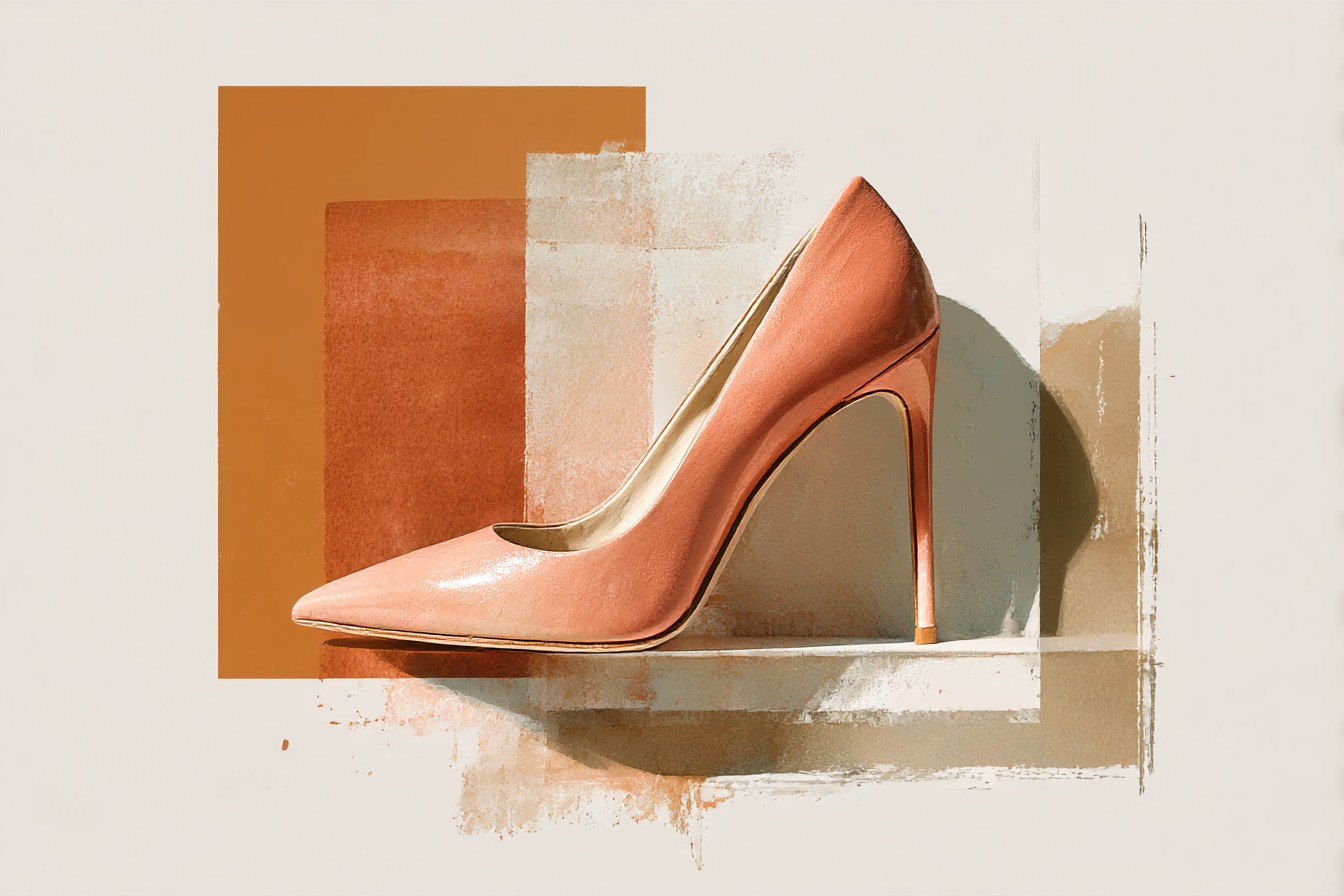
Vivier and his contemporaries could sketch a four inch pin heel all day long, but without that internal support the shoe collapses the first time someone actually walks in it rather than poses in it. I’ll admit I found this genuinely deflating to learn, because I wanted the story to be about a person with a vision, and instead it’s about a supply chain problem getting solved right around the same time a few ambitious shoemakers were ready to use the solution. The timing is the whole story. Take away postwar metal manufacturing and Vivier’s stiletto is just a nice drawing that breaks the first time Dior’s model steps off the runway.
So where does that leave the actual answer. I think you have to say it plainly: nobody invented the stiletto heel, a handful of people converged on it once the materials finally allowed it, and Vivier gets the name attached because his version arrived with the right house, the right press, and shoes that didn’t snap. If you want a single name for a dinner party, say his, it won’t get you the costume historian stare down. If you want the true answer, it’s an engineer nobody remembers, working out how to run a steel rod through four inches of nothing, and a few designers arguing over who got to put their name on it once it actually worked.


