
I had a client last month, a guy in his sixties getting fitted for a wedding, tell me his father always matched socks to trousers because “matching them to your shoes is what men do who don’t own real shoes.” I laughed, then immediately clocked that he’d delivered this like scripture, like there was no argument to be had, and I sat there thinking about how confidently wrong that is as a blanket rule. It’s not wrong exactly. It’s just from an era where every outfit was one shade of navy or gray wool and the whole point was invisibility, not personality. My flatmates fight about this constantly, one of them treats trouser matching like a religious obligation and the other buys socks purely based on what shoes he’s wearing that day, and honestly they’re both right depending on what they’re actually wearing, which is the answer nobody wants because it sounds like a cop out. It isn’t. There’s a real, specific reason each camp wins in different situations, and I’m going to argue both properly instead of just shrugging.
The case for matching your trousers
The trouser match wins the second you’re in anything with structure, a suit, a blazer, tailored trousers, that whole register of dressing where the goal is one continuous line from waistband to shoe.

When your sock matches your trouser, your leg reads as one unbroken column and the shoe becomes its own separate, deliberate statement at the bottom, which is exactly the effect you want in a suit. Break that line with a sock that matches the shoe instead, and you get a horizontal band of color that visually chops your leg in half right at the ankle, which is a genuinely bad look on basically everyone, tall or not. I learned this the annoying way styling a groomsman party where four guys in identical charcoal suits wore black socks that matched their black shoes instead of their charcoal trousers, and in every single photo there’s this weird gray sock of ankle showing between hem and shoe like the suit forgot to finish itself. Matching to trouser fixed it instantly when we swapped socks an hour before the ceremony, and nobody but me even noticed why the second round of photos looked sharper.
This is also the rule that actually holds up under a tape measure, in the sense that trouser break and sock length are doing coordinated work whether you’ve thought about it or not. A trouser that breaks slightly above the shoe and a sock that matches it means even if you sit down, cross your leg, hike up a little reaching for something, you’re not flashing a chunk of pale shin or a clashing color, you’re just showing more of the same tone. That’s the actual functional argument underneath the aesthetic one, and it’s the reason this rule survived from your grandfather’s era into every proper tailoring guide since. Where it falls apart is when people apply it religiously to outfits that were never built for that kind of formality in the first place, chinos and a casual button down do not need the sock-to-trouser treatment, and forcing it there just makes you look like you’re trying too hard to dress like you’re going somewhere you’re not. The rule is correct, it’s just correct for a specific register of dressing, and treating it as universal is where my client’s dad and about half of Reddit go wrong.
You Might Also Like

The case for matching your shoes
Now flip the outfit to anything with sneakers, boots, or genuinely casual shoes, and matching your trousers stops being sophisticated and starts being weird, like you missed the memo that the whole outfit relaxed. Sock to shoe is the move here because in casual dressing the shoe is usually the loudest, most deliberate piece of the outfit, the thing you actually chose with intention while the trousers are just doing structural duty, and the sock’s job is to extend that intention rather than quietly disappear into the pants. My flatmate who does this, the sneaker guy, will match a white sock to white sneakers under black trousers and it looks completely fine, actually good, because the eye reads shoe and sock as one unit and the trousers as a separate neutral block, which is exactly how casual outfits are supposed to be built, in chunks rather than one continuous line.
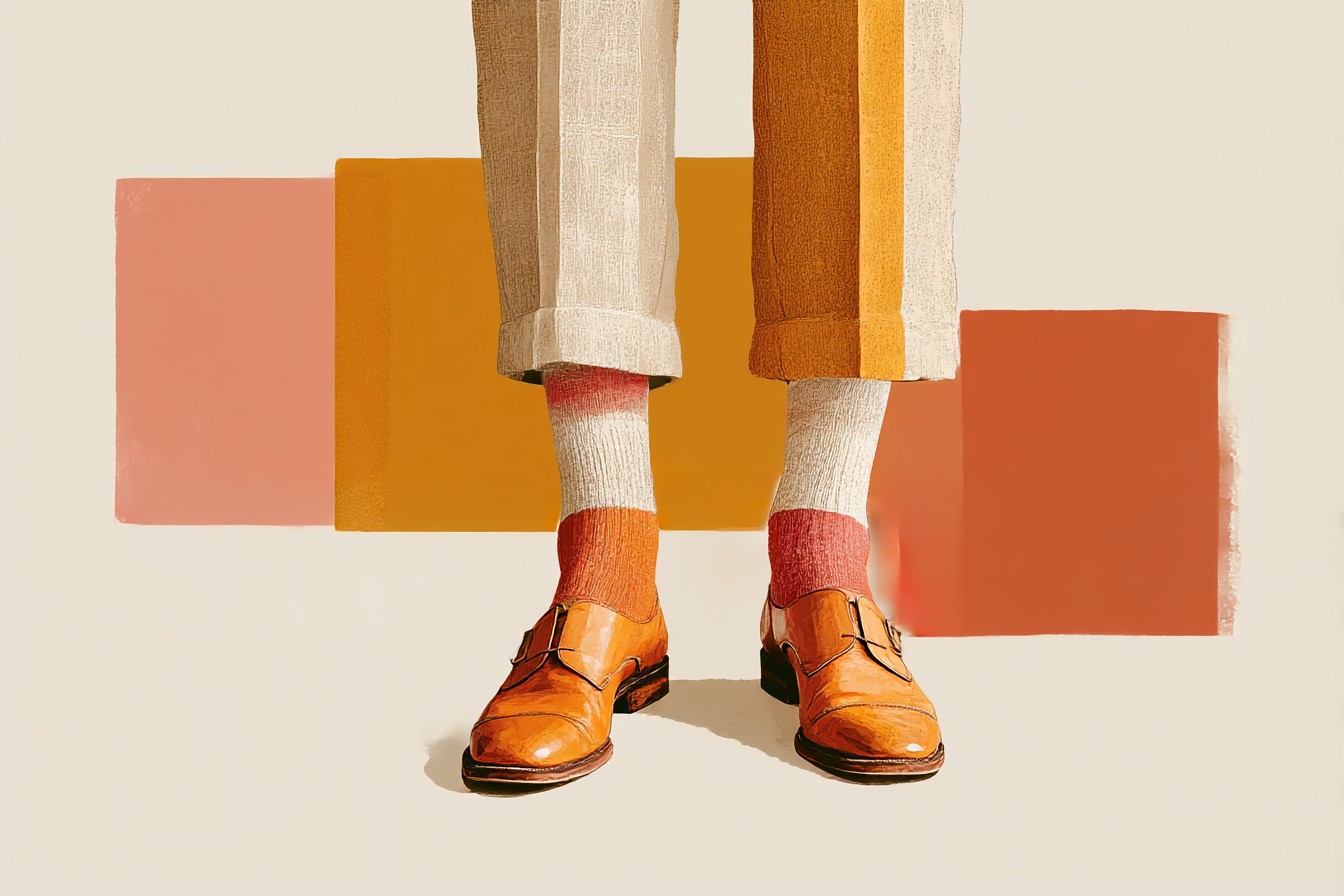
The other reason shoe matching wins in casual contexts is way less romantic than tailoring theory, it’s that trouser matching in casual wear just looks like an accident nine times out of ten. Cropped chinos with a sock that awkwardly matches the trouser but clashes with a pair of colorful sneakers reads like you got dressed in the dark, not like you made a choice. Matching the sock to the shoe instead signals the opposite, it signals that the shoe was the decision and everything else was built to support it, which, again, is just accurate to how most people actually shop for and wear sneakers and boots. I’ll admit my sneaker flatmate has made me eat my words more than once on this, I spent an embarrassing amount of time being smug about tailoring rules before admitting his method just works better once you’re out of suit territory, and I should probably say that more plainly instead of only bringing it up to argue with him.
So here’s where I actually land, not as a dodge but as the real answer: the fabric of the outfit tells you which rule applies before you even open the sock drawer. Tailoring, suiting, anything with a trouser break and a real shoe, match the trouser, every time, no exceptions I’ve found worth defending. Sneakers, boots, anything casual where the shoe is doing the talking, match the shoe and let the trousers be background. The rule your father or your client’s father learned wasn’t wrong, it was just built for a wardrobe that doesn’t exist for most people anymore, and pretending one rule covers both is how you end up with a groomsman photo full of visible gray ankle or a chino outfit that looks like it got dressed by committee.


