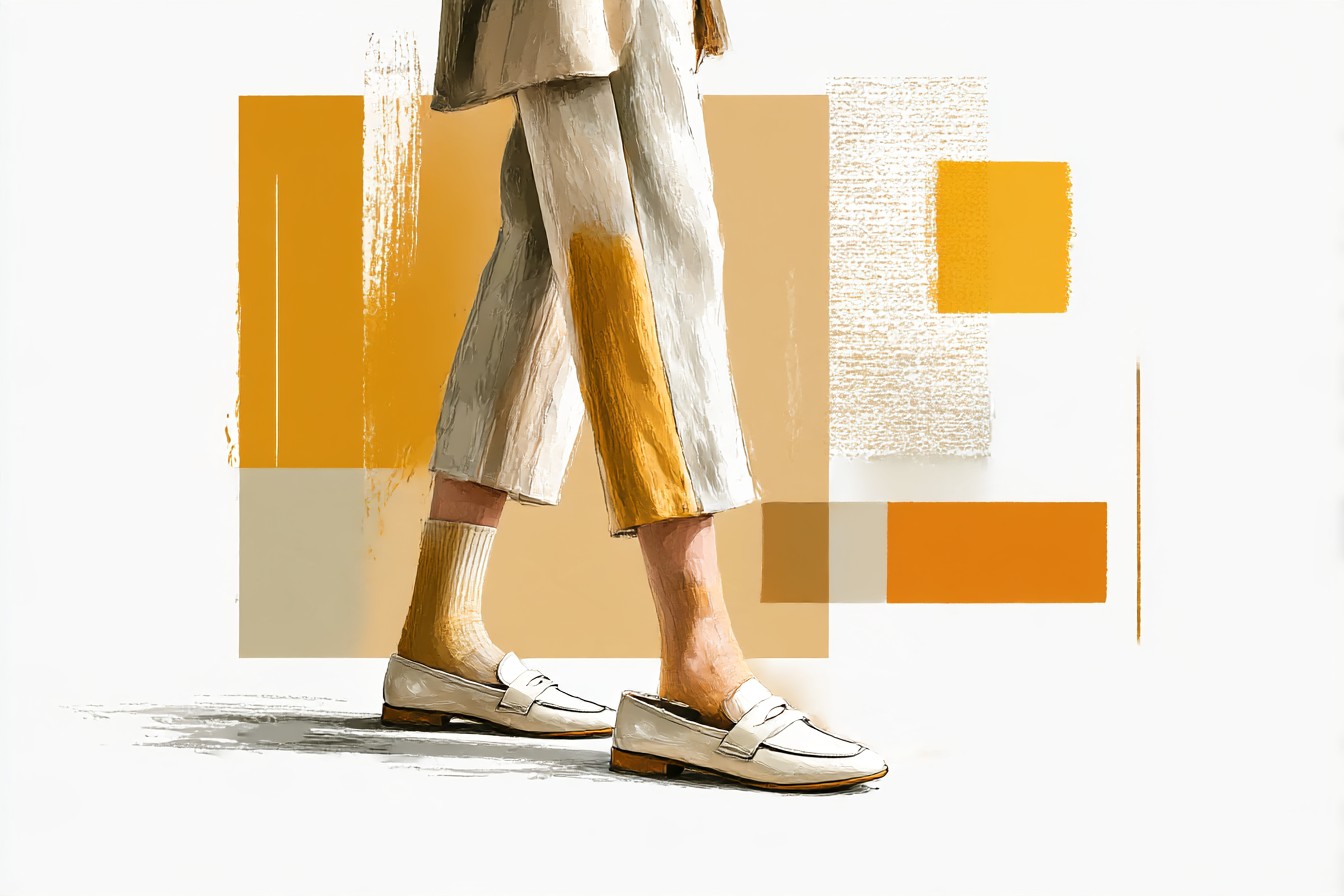
Someone in my office, a woman two desks over who wears exclusively black and grey and has never once complimented my clothes, called loafers “the sensible aunt of shoes.” I laughed, because she wasn’t wrong about the reputation. Boxy. Beige. The shoe you buy when you’ve given up. I believed that too for a long time, filed loafers next to orthopedic sandals in my head, a category of footwear that exists purely to protect your feet rather than say anything about you.
Then I bought a pair on a whim, a proper penny loafer in oxblood leather, because my usual heels had given out mid commute and I was standing in a shoe store at 6:40pm making a decision under duress.
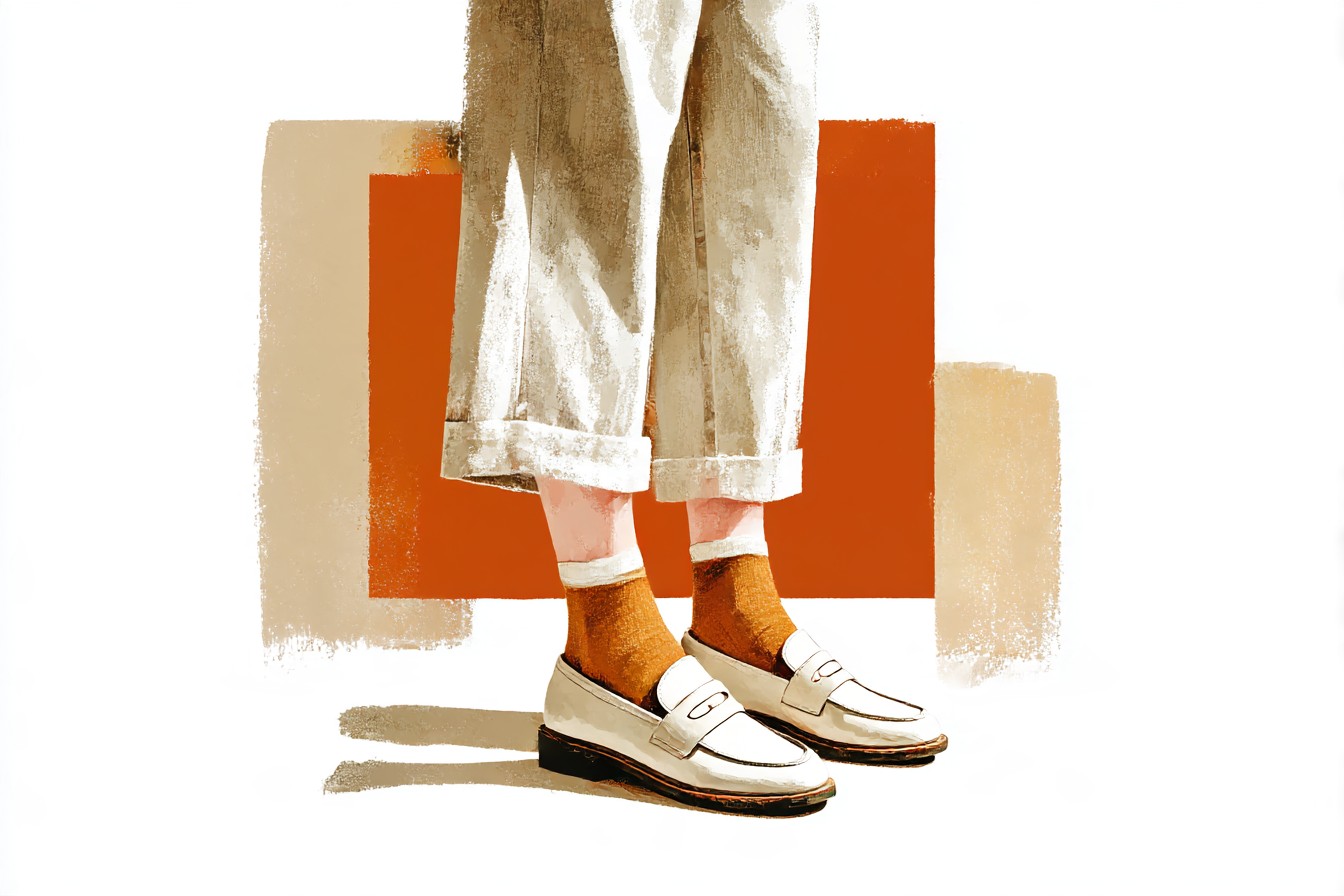
I wore them the next day with trousers I’d normally pair with pumps and something shifted. Nobody at the office said anything, which is honestly the highest compliment my office gives, no comment means no complaint, and no complaint from a room full of people who will absolutely tell you if your hem is uneven means it worked.
What changed my mind wasn’t the shoe itself, it was what happened around it. Loafers turned out to be the most cost per wear efficient thing in my closet, not because they’re cheap, mine were not, but because they solved a problem I’d been quietly overpaying to solve with everything else: how to look finished without looking like I tried. Heels announce effort. Sneakers announce that you gave up on effort entirely. Loafers sit in a spot I didn’t know existed, competent without being try hard, which, if I’m honest, is the exact energy I’m going for in most client meetings.
But loafers are also a genuinely confusing shoe to build an outfit around, because the internet’s advice tends to stop at “wear them with anything,” which is the kind of unhelpful sentence I’d flag in a report. What socks. What pants. Whether jeans work or whether that’s a rule someone invented and never tested. So this is me actually testing it, section by section, the way I’d build a case for anything else I was about to spend real money defending.
[Women’s Loafers]
Classic Leather Loafers With Tailored Pants
This is the pairing I trust most, and also the one that took me the longest to get right, because my first instinct was to match the loafer to the pant the way you’d match a belt to a bag, matching leather tones, matching formality levels, treating it like a spreadsheet with only one correct answer. It’s not. My oxblood loafers look better with a charcoal, slightly cropped trouser than they ever did with anything actually brown, because the contrast does more work than the coordination.
The length matters more than the color, and I learned this the hard way at a client dinner where my trousers broke exactly at the ankle bone and pooled slightly over the shoe, which made the whole outfit read as unfinished, like I’d forgotten to hem something. A trouser that stops right above the ankle bone, showing maybe an inch of skin or sock, is the difference between “put together” and “borrowed my dad’s pants.” I now own three pairs of the same cut in different colors purely because I built the case for it after that dinner and refused to lose the argument to myself a second time.
Pleated trousers work better than I expected, wide through the leg but cropped short, because the volume up top balances a shoe that’s flat and fairly minimal down low. Straight leg wool trousers, the kind I wear five days a week from October through March, are the safest version of this and also the most boring, and I say that as someone who owns six pairs. The loafer earns its keep here specifically because it survives a nine hour day of sitting at a desk without creasing at the toe the way a pointed pump does, and that’s not a small thing when you’re judging cost per wear against actual comfort.
[Loafers With Tailored Pants]
The Sock Question, Answered Properly
Nobody warns you that this is where loafers get complicated. I spent an actual lunch break once standing in a department store trying to decide between no show socks and a visible crew sock, which is a genuinely absurd amount of time to spend on hosiery, and I know that, and I’d do it again.
Here’s what I’ve landed on after wearing loafers through three full Boston winters. Bare ankle, no sock at all, works from May through September and reads clean, slightly European, the kind of thing that looks intentional on a warm day with cropped trousers. The rest of the year it just looks cold, and it is cold, and nobody needs to suffer for an aesthetic that a five dollar sock fixes.
A thin no show sock is my daily default, invisible from a normal standing distance, and it solves the actual physical problem of leather loafers rubbing against a bare heel, which happened to me exactly once, produced a blister the size of a dime, and taught me that “breaking in” a shoe is not a myth invented by shoe salespeople.
The visible sock, a ribbed crew in a contrast color, cream against a black loafer, is the one I was most skeptical of and now genuinely enjoy, but only with cropped or ankle length pants where the sock is clearly a choice and not an accident of a trouser being slightly too short. Worn with full length trousers it just looks like a wardrobe malfunction. The rule I’ve settled on, and I’m treating this like a policy at this point: show the sock on purpose or don’t show it at all, there’s no comfortable middle where an inch of sock peeks out unintentionally and reads as considered.
[Socks to Wear With Loafers]
You Might Also Like

Loafers With Straight Leg and Wide Leg Jeans
I resisted this pairing for longer than I’ll admit, on the theory that loafers were a “pants shoe,” strictly professional, and jeans belonged with sneakers or boots and nothing else. That theory lasted until a Saturday when I had exactly one clean pair of shoes, the oxblood loafers, and exactly one clean pair of pants, dark straight leg jeans, and no time to litigate the decision.
It worked better than anything I’d deliberately planned in weeks, which is the kind of result that annoys me on principle. The jeans need to be a proper straight leg or a wide leg with some structure to them, cropped at or just above the ankle. Skinny jeans, tapering down to nothing at the ankle, make the loafer look stranded, like the outfit forgot to finish itself. A dark wash reads more put together than a light wash, closer to the trouser logic from earlier, and a slight break in the fabric right at the shoe, rather than pooling over it, keeps the whole thing from tipping into “errands” territory.
Wide leg jeans are the version I wear on the days I want to look like I tried without actually trying, paired with a loafer and a fitted top, because the volume on the bottom needs something minimal underneath it, and a chunky sneaker fights the proportion while a loafer just sits there quietly doing its job. My manager, who has commented on exactly one outfit of mine in four years, mentioned this one, which tells you either that it worked or that everything else I wear is genuinely unremarkable. I’ve chosen to believe the former.
[Loafers With Jeans]
Platform and Lug Sole Loafers for Longer Days
The chunkier version of this shoe, thick rubber sole, sometimes a full platform, showed up in my closet because my feet stopped tolerating a flat leather sole after back to back client days on concrete floors, and I needed a shoe that looked like the first kind of loafer but felt like a sneaker, which sounds like it shouldn’t exist and mostly doesn’t, except it does, and I own two pairs now.
These need a slightly different math than the classic version because the extra height at the sole changes your proportions more than you’d expect from an inch and a half of rubber. Trousers that were the right length with a flat loafer will suddenly sit too high with a lug sole version, so I had to actually rehem one pair, which felt like an unnecessary expense until I did the cost per wear on how often I actually wear them, which is most weeks, so fine, I’ve made peace with it.
Wide leg trousers balance the chunkiness best, because a slim cropped pant on top of a thick sole looks slightly top heavy, like the outfit is wearing hiking boots to a wedding. A midi skirt, something with a bit of movement, oddly works too, the contrast between a soft fabric and an aggressive sole is more interesting than it has any right to be, and it’s the one combination on this list that consistently gets an actual comment from strangers, not colleagues, actual strangers on the street, which I’ve decided means something.
[Platform Loafers]
Patent and Colored Loafers With Skirts and Dresses
I own the brown ones, the black ones, and then, against every instinct I have about buying practical things, a pair of bottle green patent loafers that I bought because they were on sale and I had a bad Tuesday and, for the record, clothes cannot fix a bad Tuesday, and they did not, but I’ve worn them more than almost anything else I own since, so the spreadsheet was wrong and I’m choosing not to be bitter about it.
Patent finishes read dressier automatically, which means they’re the one loafer that actually works with a dress or a skirt without looking like you got dressed for the wrong occasion. A slip skirt, midi length, with a fitted top and the green patent loafers is the outfit that got me asked, in an elevator, where I got my shoes, by someone I have never spoken to before or since, which is the single most validating fashion moment I’ve had this year and I’m including it here specifically because it proves the point better than I could argue it.
The color version works the same way a good accent piece works anywhere else in a wardrobe, it needs to be the loudest thing in the outfit and everything else needs to shut up around it.
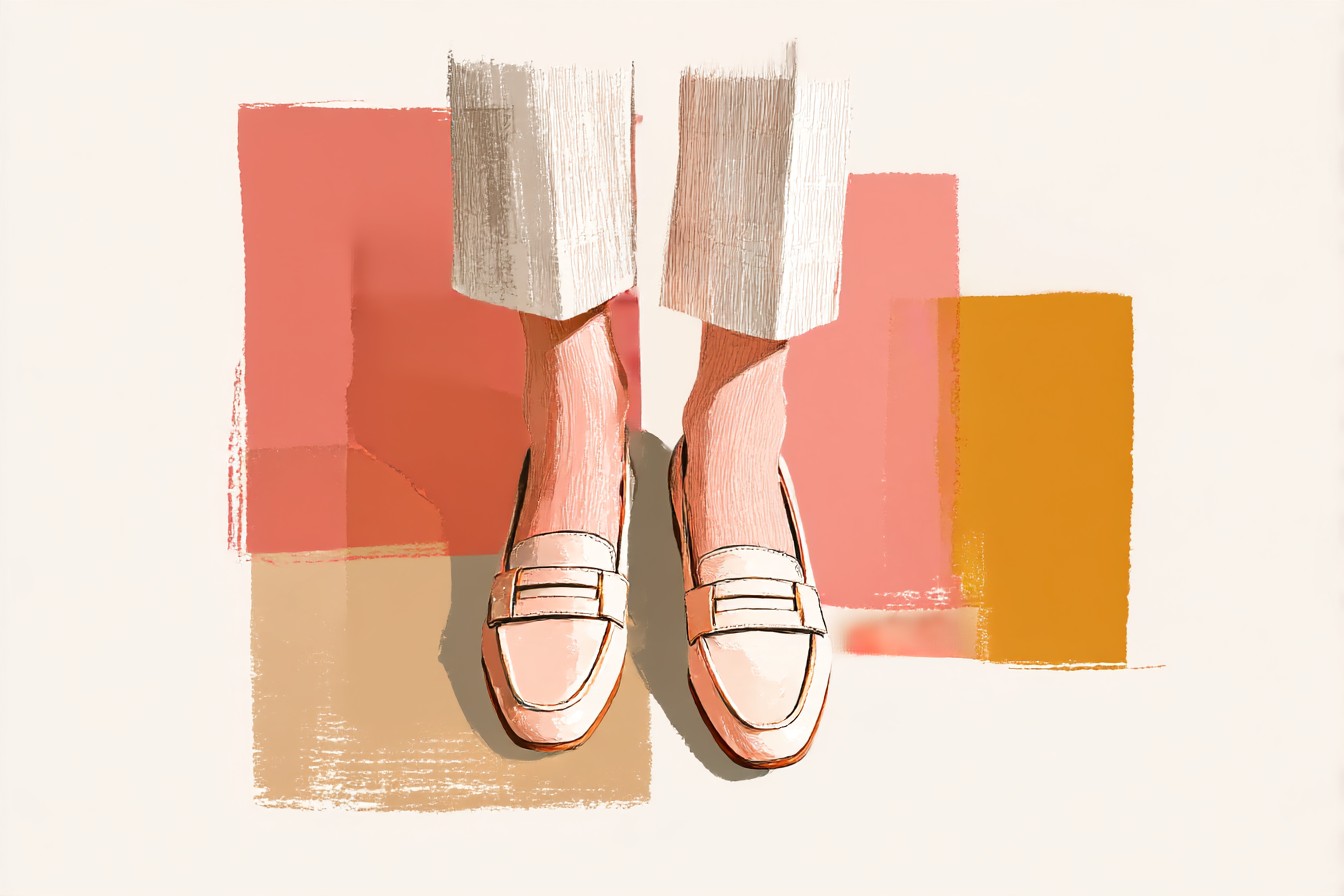
Neutral top, neutral bottom, one loud shoe. I tried the green loafers once with a printed skirt and it was, genuinely, too much, competing patterns of a sort I hadn’t accounted for, color instead of print but the same problem. Lesson learned, filed away, not repeated.
[Colored Patent Loafers]
Final Thoughts
I built a whole internal case against loafers years ago on evidence that turned out to be one bad shoe store display, and I’ve spent this entire piece dismantling it, which feels like exactly the kind of thing I’d get mildly annoyed at myself for if a coworker did it. But that’s genuinely what happened. The sensible aunt shoe turned out to be the most quietly efficient thing I own, better cost per wear than half my heels, better recovery from a nine hour day than most of my closet.
What actually matters, if you’re trying to figure out what to put with them, is proportion more than matching, sock as a deliberate choice rather than an accident, and letting the shoe be either the neutral or the statement but never something in between that’s trying too hard to be both. I still own too many pairs for someone who once called them boring. That’s not really a contradiction, it’s just what happens when you test something properly instead of trusting the reputation someone else built for it.


