Everyone repeats the same line about the Queen’s handbag like it’s gospel: she carried it so she could signal secret messages to her staff, switching hands and arm positions to mean “get me out of this conversation” or “I need to leave in five minutes.” I have read this claim roughly four hundred times across four hundred slightly different listicles, always stated with total confidence, always sourced to absolutely nothing. And look, I want it to be true, it’s a great story, it makes the Queen sound like she was running a covert op out of a Launer handbag. But I’ve gone down this rabbit hole more than once now, and the honest answer is messier and, weirdly, more interesting than the secret-signal myth. The bag wasn’t a walkie talkie. It was doing something much more ordinary and much more telling about who she actually was.
The Practical Reason: She Genuinely Needed It On Her
Start with the boring truth, because the boring truth is the real one. The Queen was a working woman for seventy years, and working women carry bags because they have things in them.
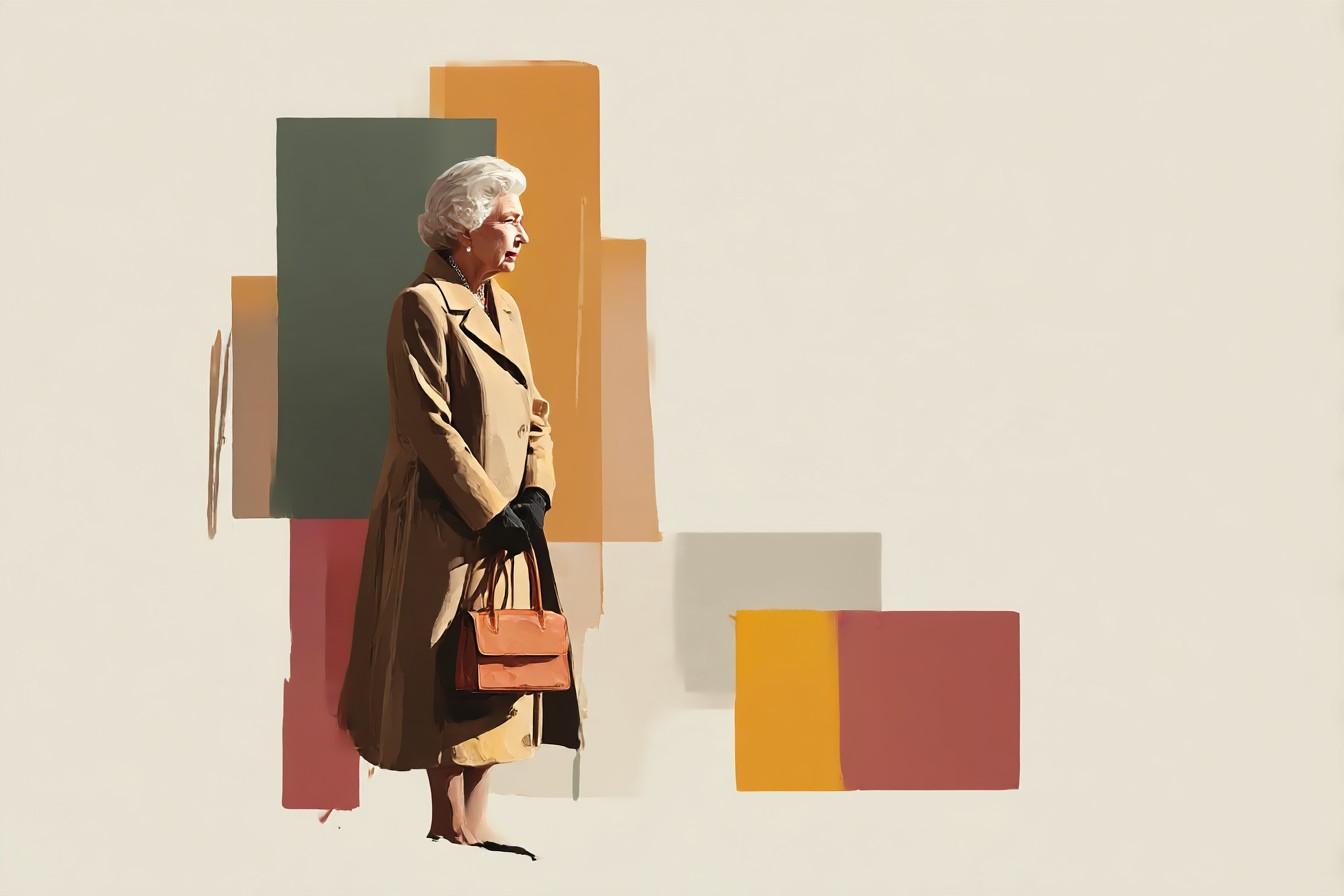
Reported contents over the decades have included reading glasses, mints, a mirror, a fountain pen, and famously a small supply of dog biscuits for the corgis, which honestly is the most relatable detail in the entire royal archive. She didn’t have pockets in half of what she wore, and even when she did, a monarch in full ceremonial dress is not patting herself down for lip balm in front of a crowd of four thousand people. The bag was functional in the most unglamorous way possible, the same way mine is functional, except mine has a receipt from 2019 and a single earring with no partner rattling around the bottom.
What gets lost in the “secret signal” version of events is that she couldn’t exactly hand her stuff to an aide the way a lot of famous women do, where someone trails a step behind holding the sunglasses and the phone and the emergency snacks. She was, by design, meant to look self sufficient and composed at every single second she was in public, which for anyone else would mean an assistant doing the actual work off camera. The handbag let her BE that self sufficient figure while still having somewhere to put her glasses, which is a genuinely elegant solution to a problem most of us solve by just asking someone else to hold our stuff. I say this as someone who has handed my coffee, phone, and a pair of shoes to a friend at a wedding because I refused to carry a bag that day and immediately regretted it for four hours.
There’s also the detail people mention less often, which is that she reportedly always held the bag on her left arm, which kept her right hand permanently free for the thing she did more than almost anyone else alive, which is shake hands. Thousands and thousands of handshakes over decades, and you cannot do that gracefully if you’re constantly shifting a bag from hand to hand or setting it down and picking it back up. That’s not a secret code, that’s just someone who figured out, early and permanently, the most efficient way to carry her own things through a life that involved almost zero private moments to fix a wardrobe malfunction or check a mirror without an audience.
You Might Also Like

The Image Reason: The Bag Was Doing A Job Nobody Talks About
Here’s where I get a little more opinionated, because the practical explanation is only half of it and the internet loves to stop there. The handbag was also armor, and I mean that completely seriously, not in a cute metaphorical way. A specific, unchanging accessory carried the exact same way for seventy years becomes a form of visual consistency that does real work, especially for a public figure whose actual clothing changed constantly to match diplomatic color coding and cultural sensitivity. Everything else about her outfit was negotiable, calculated, occasionally political. The bag was the one constant. You could put her in any color, any hat, any coat, and the silhouette still read as instantly, unmistakably her, which is a kind of branding that most actual brands would kill for and could never manufacture with an ad budget.
I think about this because I have spent an embarrassing amount of time watching brands try to invent “iconic” the fast way, slap a logo everywhere, call it timeless in the press release, charge accordingly, and it never works, because you cannot buy seventy years of consistency, you can only actually do it. The Queen wasn’t marketing a handbag. She was just carrying one, the same way, for decades, and the consistency itself became the message, no press release required.
That’s the part that gets flattened into a “secret signals” myth, because a magic code is a punchier story than “she was disciplined about her own personal presentation for most of a century,” but the second one is the actual reason people still talk about the bag at all.
And there’s a colder, more useful function underneath the branding, which is that the bag gave her something to hold. Public life at that level means being watched constantly, cameras on your hands as much as your face, and having a fixed object to hold gives you somewhere to put your hands that isn’t awkward and isn’t performative. I noticed this properly once at a work event where I had nothing to hold for twenty minutes and ended up doing this weird thing with my arms that a friend later described, kindly, as “very confused scarecrow.” A held object solves that instantly and permanently, no thought required, which after decades of public appearances is not a small mercy.
So did the Queen always carry a handbag. Basically yes, as close to always as any human habit gets, and not because of a covert signaling system that would honestly have been exhausting to maintain for seventy years. It was a genuinely practical object doing a genuinely practical job, and it was also, quietly, one of the most effective pieces of personal branding of the twentieth century, done by someone who almost certainly wasn’t thinking about it as branding at all. That combination, ordinary function and accidental image control, is a lot more compelling to me than a secret code ever was, and it’s the version I actually believe.


