
The word on chinos has been settled for so long that nobody even argues about it anymore. They are the pants of guys who stopped trying. The default when jeans feel too casual and suit trousers feel like too much effort, the beige middle ground you reach for when you cannot be bothered to make a decision. I believed all of that for years. I owned exactly one pair, a slightly too big khaki chino from a mall store, and I wore them the way you wear a uniform you resent, only when nothing else was clean.
What changed my mind was not a fashion epiphany, it was a colleague named Marcus who wore olive chinos with white leather sneakers and a chambray shirt to a Friday client meeting, and looked more put together than half the guys in actual suits.

Nothing about it was flashy. It was just correct, in a way that made me realize I had been treating chinos as a single flat category instead of a whole range of fabrics, cuts, and colors that each do a different job. The stone khaki pair I owned was doing office duty badly. It was never going to work as a weekend pant or an evening pant, because it was cut and colored for exactly one purpose and I was asking it to be everything.
Once I started buying chinos the way I buy shirts, thinking about what each pair is actually for rather than grabbing the first beige option, the whole category opened up. I ended up with five pairs that do genuinely different work in my closet, and figuring out what shoes to wear with each one, and what to build around them, took some trial and error I would rather hand you directly than watch you repeat. There is a version of this pant for almost every situation between gym clothes and a full suit, and most guys are only using the one version, over and over, wondering why it feels flat.
This is not a case for owning twelve pairs of nearly identical trousers. It is a case for being deliberate about the two or three you actually need, choosing them by color and weight rather than by whichever one is folded on top at the store, and learning the shoe pairings that make each one work instead of defaulting to the same white sneaker for every outfit regardless of what is happening above the ankle.
[Chinos For Men]
The Stone Khaki, Still the Workhorse
I am not abandoning the classic, I am just using it correctly now. A proper stone or khaki chino, mid weight cotton twill, straight or slightly tapered leg, is still the single most useful pant I own, but only once I stopped pairing it exclusively with brown dress shoes and a tucked in polo, which is the combination that made it feel so tired in the first place.
The move that changed things was brown suede desert boots. Something about suede against that flat stone color reads relaxed and a little worked out, rather than office issued. With a plain white tee and an unstructured navy blazer thrown over it, that same pair of pants goes from Tuesday desk to Friday dinner without changing a single item except maybe rolling the cuff once. White leather sneakers do the job too, cleaner and more casual, good for daytime errands or a coffee meeting where you want to look tidy but not like you tried.
Where I went wrong for years was black shoes. Black leather with stone chino reads like a uniform, like the pants were assigned rather than chosen. It is not wrong exactly, it just flattens everything, no contrast, no interest. Save the black shoe for a darker pant. With stone or khaki, lean into the warmth, browns, tans, off white soles, anything that keeps the palette in the same tonal family rather than snapping to high contrast.
Fit matters more here than with any other color, because khaki shows every inch of extra fabric. A slightly tapered leg that breaks once at the shoe, not puddling into three folds, is the difference between this pant looking intentional and looking like a hand me down from an older cousin.
[Classic Khaki Chinos]
Navy Chinos for the Blazer Nights
Navy chino is the pair I reach for when the occasion is a half step above casual and I do not want to commit to actual dress trousers. It reads dressier than khaki almost instantly, mostly because the darker color absorbs more visual weight, which makes even a simple crewneck sweater over it look like an outfit rather than an afterthought.
This is where I finally understood the appeal of a good leather loafer. Penny loafers or a plain toe slip on, in a rich brown or burgundy, against navy chino, is close to the easiest smart casual formula that exists. Add a light blue oxford shirt, sleeves rolled, and you have something that works for dinner reservations, a partner’s work event, or the kind of Sunday where you end up somewhere nicer than planned. I made the mistake once of wearing bright white sneakers with navy chino to what turned out to be a slightly upscale restaurant, and I spent the whole meal feeling like I was in gym clothes at a wedding. The sneaker was not the problem, the wrong sneaker for the room was.
Dark brown derby shoes or even a clean chukka boot handle the colder months version of this same pairing, especially with a wool overshirt or field jacket layered on top. Navy chino also happens to be the one in my rotation that pairs best with patterned shirts, small checks or subtle stripes, because the solid dark leg gives the pattern somewhere quiet to land instead of competing with it.
[Navy Chinos]
You Might Also Like

Olive and Field Green, the Weekend Pair
Olive chino is the one that finally taught me what to wear with chinos male when the goal is looking outdoorsy and a little rugged rather than office adjacent. It has enough color and texture association with military and workwear that it pulls away from the buttoned up feeling khaki and navy both carry, even in the exact same fit.
White sneakers work here too, but the better move, the one Marcus had figured out before I did, is a slightly worn in pair, not pristine out of the box white. Something with a bit of scuff and character matches the utilitarian mood of olive better than a shoe that looks like it just left the store. Suede Chelsea boots in tan or dark brown are my other go to, especially with a flannel shirt or a canvas chore jacket over a plain tee. The whole combination leans toward the kind of outfit that looks like you dress for weekends on purpose, hiking adjacent without actually going hiking.
Avoid black shoes entirely with olive, they fight the earthy tone rather than complementing it. Also avoid pairing olive chino with another heavy green or khaki piece up top, it starts to look like a uniform rather than an outfit, something I learned after showing up to a barbecue looking like I was reporting for duty rather than attending a party.
[Olive Chinos]
Black Chinos as the Cheat Suit Trouser
Black chino gets dismissed as either too formal or too much like work pants, and it took me a long time to see it as its own useful category rather than a lesser version of dress trousers. Used correctly, it is the pant that lets you dress up an outfit at nine at night without changing into anything remotely uncomfortable.
The trick is treating it almost like you would a dark dress trouser. Clean leather derby shoes or minimal black or dark brown sneakers, the kind with no visible branding or chunky sole, keep it looking intentional. A black chino with a crisp white shirt, untucked, sleeves rolled, and a plain black or navy shoe is close to the most effortless dressed up look available to a guy who does not want to wear suit trousers to a dinner. I have worn this exact combination to two weddings with a blazer added on top and felt appropriately dressed both times, no one clocked it as pants rather than dress trousers.
Where it goes wrong is texture. A rougher heavier twill in black starts to look like workwear rather than evening wear, so this is the one pair where I actually pay attention to a slightly finer, more compact weave. It changes everything about how formal the pant reads, even though the color and cut are identical to a rougher version.
[Black Chinos]
Lightweight Summer Chinos for the No Sock Season
Come warm weather, the mid weight cotton twill pairs get retired and a lighter cotton linen blend chino takes over, usually in a lighter stone, sand, or faded olive. The weight difference is not subtle, these pants breathe in a way the heavier ones simply do not, and the slightly looser drape suits the season.
This is the one category where no show socks and loafers or boat shoes genuinely earn their reputation, worn barefoot or close to it, against a rolled cuff. Espadrilles work here too, something I resisted for years assuming they were too costume like, until I wore a pair with pale sand linen chino on a trip and realized how naturally the texture matched the relaxed fabric.
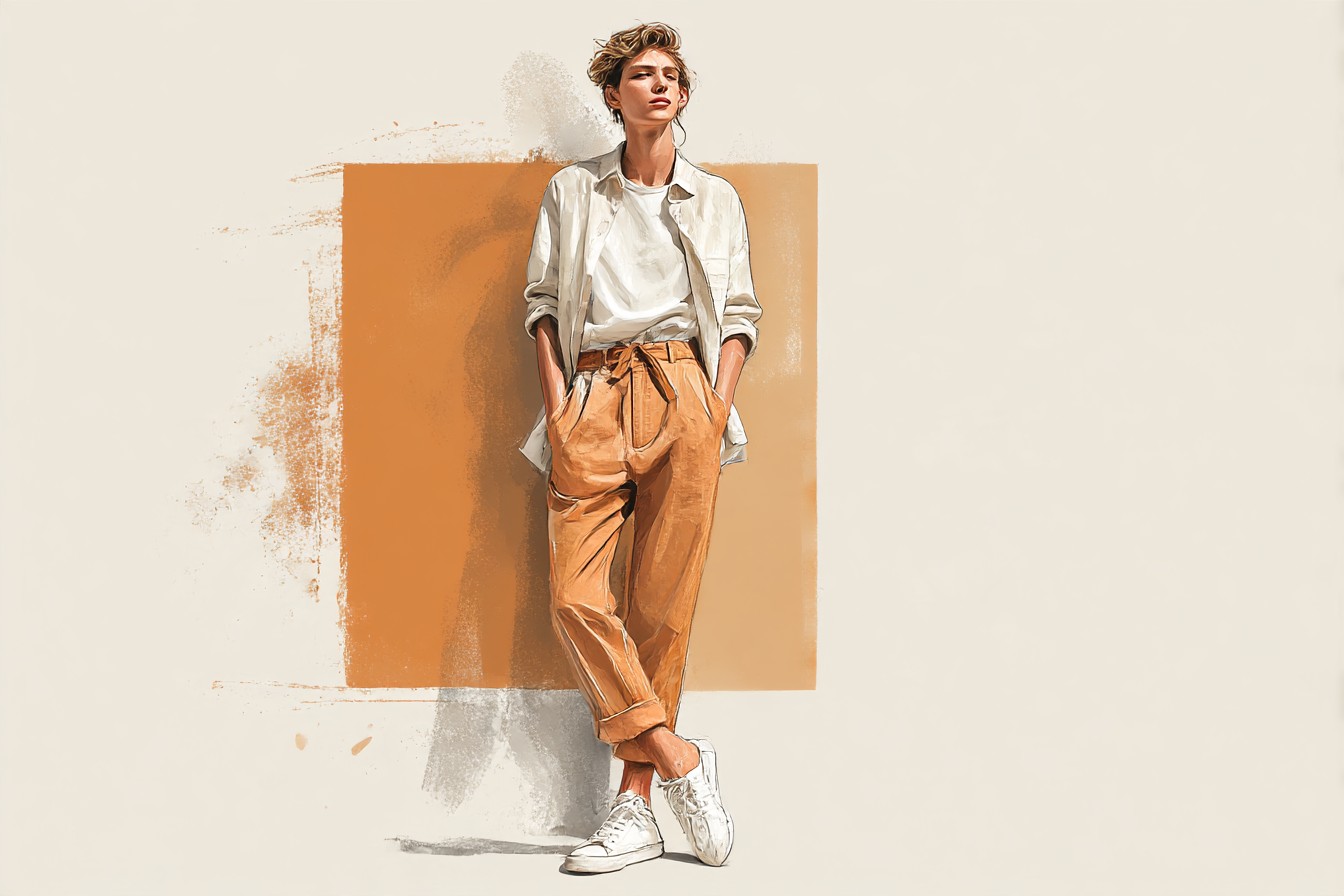
Canvas sneakers, the low profile kind rather than a chunky trainer, round out the rotation for anything requiring a bit more walking.
The mistake I made early with this pair was ironing them like the heavier chinos, which stripped away the slightly rumpled texture that makes linen blends look intentionally relaxed rather than just wrinkled. A light steam, not a hard press, keeps the character intact.
[Summer Linen Chinos]
Final Thoughts
None of this required more effort than what I was doing before, mostly it required fewer assumptions. Chinos are not one pant playing one role, they are five or six different pants wearing the same name, and the fastest way out of the boring beige reputation is treating each color and weight as its own decision rather than a single default you reach for regardless of occasion. Stone for the office and easy weekends, navy for anything a step dressier, olive for the outdoors adjacent version of you, black for evenings, linen blends for heat. Match the shoe to the mood the color is already setting rather than fighting it, and stop assuming white sneakers solve every combination, because sometimes they are exactly the wrong note. The reputation chinos carry is earned by guys wearing one pair for every purpose. Once you stop doing that, the whole category stops being boring almost immediately.


