
I’m standing in the checkout aisle of a costume shop in October, and the woman behind me is holding two things: a “medieval princess” dress with a laced-up, boned bodice built right into the front, and a plain wool-look kirtle with a modest lace-up back. She’s got maybe thirty seconds before the kid in her cart starts a meltdown, and she asks me, dead serious, “which one’s actually medieval.” I’ve thought about this question longer than any reasonable adult should, so here’s my answer, and it’s not the one either dress on that rack wants to hear.
Corsets are not medieval. Full stop, no asterisk. The thing we picture when we hear the word, rigid, boned, hourglass-shaping, laced within an inch of your life, is a garment that doesn’t show up in any real form until the very tail end of the medieval period at the absolute earliest, and even then it’s not doing what people assume it’s doing. Medieval women, and I mean the actual centuries historians mean when they say medieval, roughly 500 to 1500, were not wearing structured undergarments built around whalebone or steel busks.

That technology and that silhouette belong to a different, later story, and every time a “medieval” costume shows up with a boned corset laced over it, it’s borrowing from an era that hadn’t happened yet.
The timeline nobody checks before they click buy
Here’s the thing that trips everyone up, including me for a solid chunk of my twenties: “medieval” and “old fashioned dress with lacing” have become basically synonymous in the popular imagination, and they’re not the same category at all. The corset as most people picture it, the true structured, boned garment meant to shape the torso, is a product of the 16th century onward, really hitting its stride in the Elizabethan and then Victorian periods. Medieval Europe ends around 1500. That gap isn’t a rounding error, that’s a full century or more of separation, which in dress history terms is enormous, it’s the difference between someone wearing a loose wool kirtle laced at the sides for fit and someone wearing a rigid boned bodice engineered specifically to compress and reshape the ribcage. I’d like to have a word with the version of me who, at about nineteen, confidently told a costume class that Guinevere would’ve worn a corset. She would not have. Nobody in her supposed century had access to the boning materials or the tailoring concept to make one.
What actually gets people is that “corset” as a word has become a catchall for any laced garment, and lacing existed medievally, just not doing the job a corset does. Medieval women absolutely laced things, kirtles, gowns, sometimes an underlayer called a “pair of bodies” that shows up later in the timeline and starts edging toward what we’d recognize as structured shapewear, but that’s still Tudor era, not medieval, and it’s doing gentle support and fit adjustment, not the dramatic waist reduction people associate with a corset.
You Might Also Like

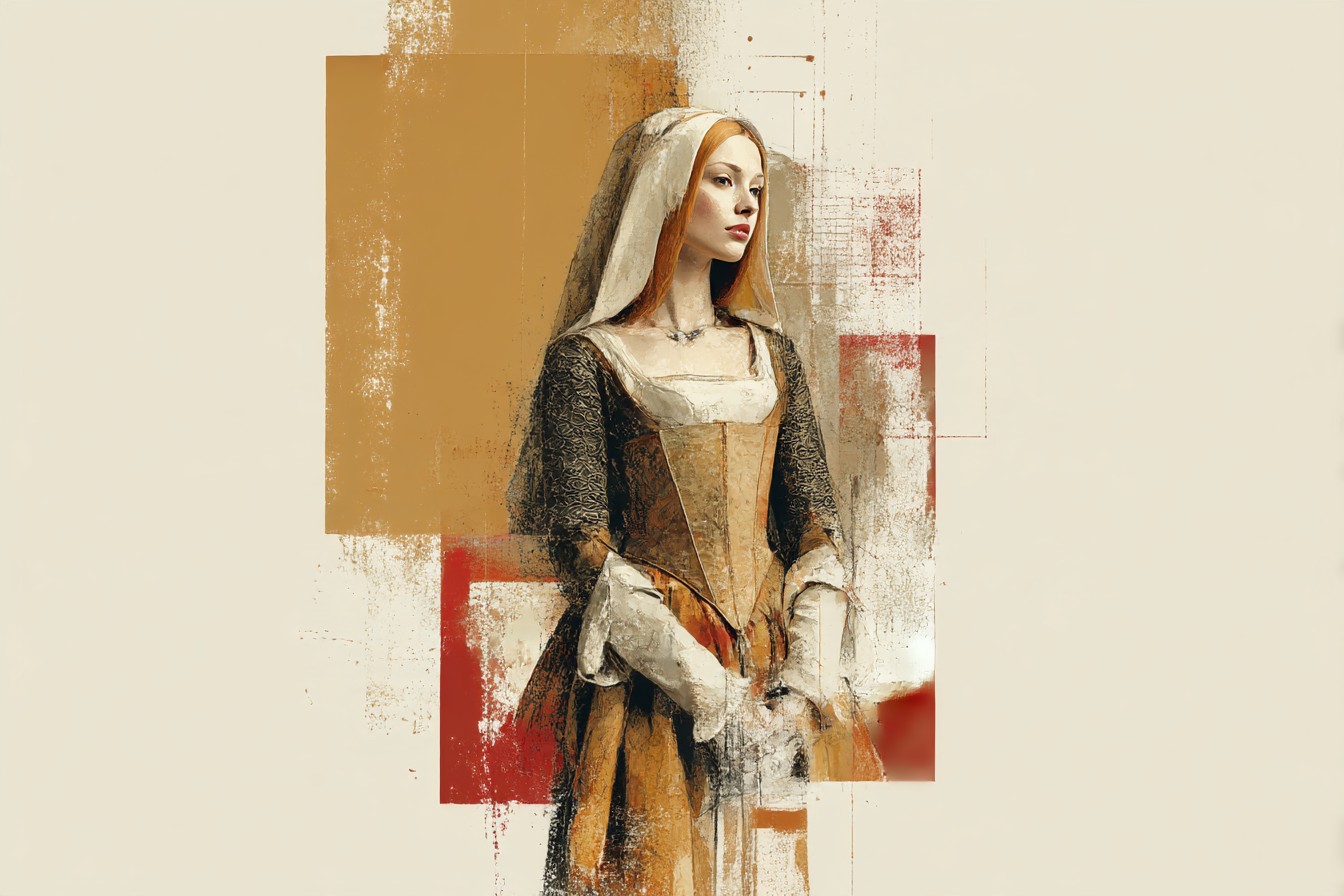
My sister, who has zero patience for costume drama and even less for Halloween in general, took one look at a “medieval fantasy” corset dress I almost bought years ago and said, “that zips up the back, that’s not even trying,” which is honestly the most useful review I’ve ever gotten on the subject, because she was right on two counts, wrong century and cheating on the closure to boot.
What medieval women actually wore, and why it got mashed together with corsets anyway
The real medieval wardrobe was built around layers, a linen underdress called a chemise or smock, then a kirtle or gown over it, sometimes laced at the front, back, or sides for shaping, and the shaping came from cut and fit, not internal boning. A well cut kirtle can absolutely create a smooth, supportive line through the torso, and I think that visual similarity, a fitted bodice, some lacing, a defined waist, is exactly what gets it lumped in with corsets in everyone’s head. It LOOKS like the same idea from a distance, structured lacing creating shape, but the engineering underneath is completely different, and that difference is the whole point historians keep trying to make and keep getting ignored by every costume retailer selling “medieval renaissance corset gowns” as one single, historically confused product category.
Part of the blame goes to how costuming and fantasy media treat “old timey” as one big undifferentiated blob, so a Renaissance Faire look, a Victorian silhouette, and an actual medieval kirtle all get filed under the same mental folder, and corsets, being the most visually dramatic and recognizable piece of historical shapewear, become the default shorthand for “historical dress” generally, regardless of century. I get why, a boned corset photographs well and reads instantly as “period costume” to a modern eye, while a properly cut medieval kirtle just looks like a nice dress, which is a much harder sell in a costume aisle. But it does mean generations of us grew up thinking Eleanor of Aquitaine was strapped into something built like a Victorian ball gown foundation, when she was actually wearing beautifully cut wool and linen that did its shaping through pattern pieces and side lacing, no boning required, no ribs involved.
So if you’re the woman in that costume aisle with thirty seconds on the clock, take the kirtle. It’s not the dramatic option, it won’t cinch anything, but it’s the one actually wearing the right century, and honestly, once you know what you’re looking at, the plain lace up back stops looking boring and starts looking like the thing that’s actually correct, which I’ve come to find more satisfying than any amount of boning ever managed.


