If there’s one thing I’ve learned in 27 years of dressing myself and 15 years of working in fashion, it’s to be wary of any style advice that claims to be “foolproof.” So when my assistant Mia rushed into our team Monday morning huddle declaring I “needed to see this formula” that was “changing lives on TikTok,” I approached the trend about as enthusiastically as one can when they’ve just showered for the day: not very. “It literally gives you the outfit math and people are crying about how it changed their lives,” she exclaimed while rifling through her phone. “My brother—who wore the same Black Keys t- shirt for five days straight once—said it ‘kinda works.’” Okay, maybe I should pay attention. From a 23-year-old man who previously struggled to care about whether his socks matched, that’s high praise. I suppose you could say I was intrigued.
Between needing to fill a slow news week and having a full head of coffee, I found myself hours deep into watching everyone from teenage trendsetters to middle-aged parents analyze their closet by category to create high/low-cuts looks I would otherwise consider jeans and a t-shirt. Millions of views later and thousands of duets seeking validation that their grandpa cardigan was in fact the Completer piece we had all been waiting for, I was still confused. “This isn’t Calc II,” I said to no one in particular as I watched video #317 explain how she went from a 5/10 look to a 10/10 perfect outfit by filling out a four-step worksheet that boiled down to, “wear clothes. but make one of them weird.” But clearly there was something to it. When a trend is omnipresent enough to span across Gen Z TikTok influencers and their parents—who, let’s be honest, have previously spent their entire adult lives believing getting dressed and “putting on clothes” were one in the same concepts—than you better believe I was going to figure it out.
So I did some research. Like, actual journalism.

First, I called up a mathematician. “The thing about your average human brain is it doesn’t understand math equations the way a mathematician would,” says Dr.
Elena Rodriguez, applied mathematics professor at NYU and completely unintentional fashion icon. “So when people are presented with ‘Base + Interest + Completer + Accessories,’ that works as a recipe for them. There’s enough structure provided that they don’t feel overwhelmed by the possibilities, but it’s also open-ended enough where they can fill in the blanks with things they already own.” In other words, it’s adult bike pedals for your fashion choices. But like, the good kind of training wheels.
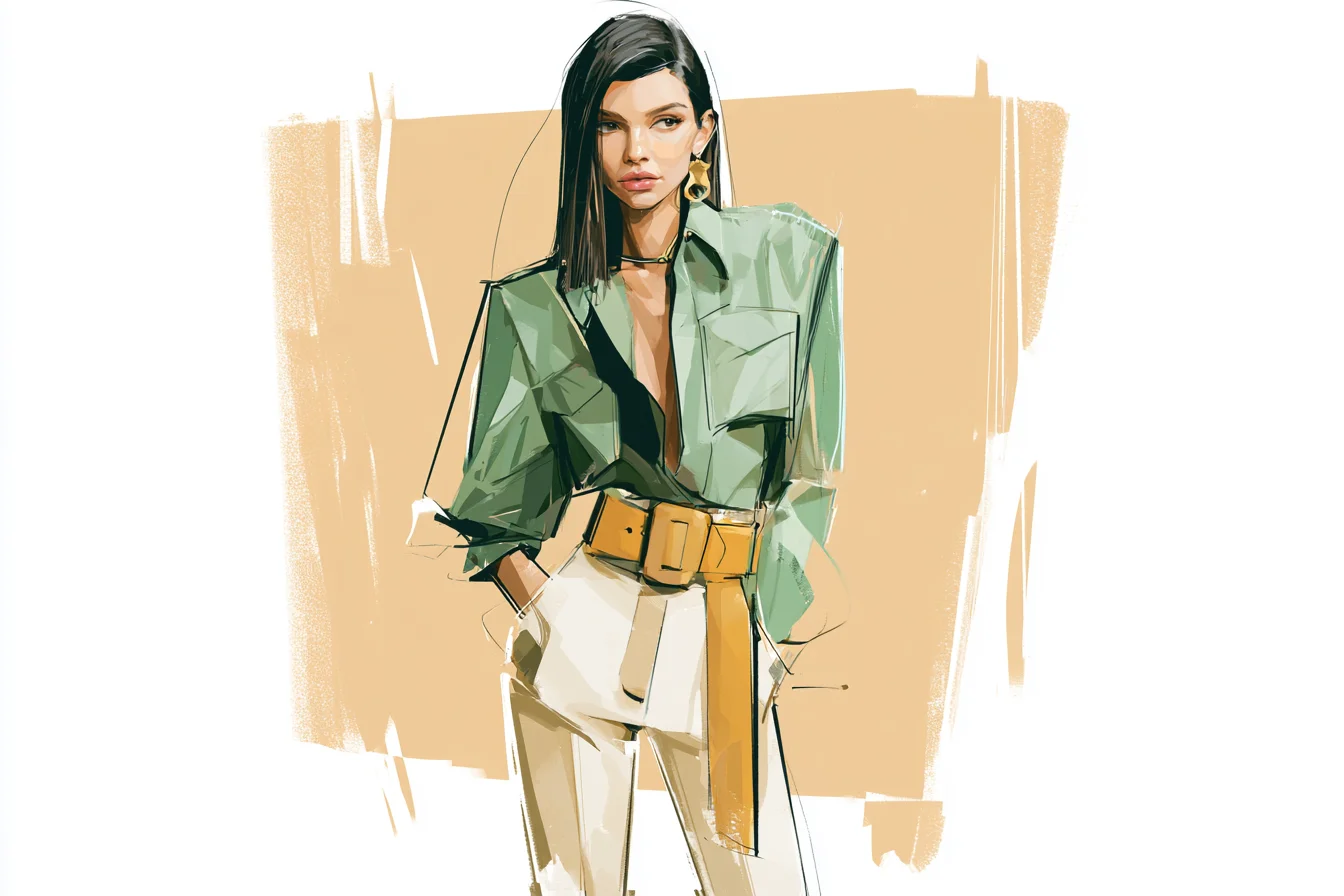
So here’s the breakdown of this mystical math formula that’s teaching normal people how to dress: BASE + INTEREST + COMPLETER + ACCESSORIES = PERFECT OUTFIT First, you start with your Base. This refers to your foundational pieces—usually larger items like pants, skirts, dresses, or shorts along with a complimentary top. The rule of thumb here is you should start with well-fitting basics you own that don’t necessarily excite you, but fit into the rest of your outfit.
Your Interest piece is essentially what brings your outfit from plain ol’ Base to a look with intention. Think textured sweater, graphic tee, colored pants, or any item that “interests” the eye. The key to this TikTok corner is that your Interest doesn’t have to be busy or crazy—it can simply be a pop of texture, color, or subtle pattern.
Completer 👏🏼 piece 👏🏼 ohhhhh. If there’s one step to the formula people say they skip when they don’t know why their outfit “just looks off,” it’s adding a completer piece. Literally, a piece that completes your outfit.
This can be a jacket, cardigan, vest, overshirt—the options are endless. But according to TikTok, it’s the step most of us are skipping. Last but not least, you finish off every outfit with Accessories.
Jewelry, bags, scarves, hats, shoes… you name it. The only rule of accessories according to #OutfitMath is that they shouldn’t overpower your Interest piece. Where this algorithm deviates from your typical, “add a pop of color” or “don’t forget your accessories!” style advice is that it provides a full checklist for beginners to follow, but is loose-yaneough to work within someone’s personal style.
Sure, the formula can literally tell you to add a bright green sweater as your Interest if that floats your boat. But for beginners looking at their closet full of clothes and feeling utterly defeated, something about checking off boxes seems far less intimidating. “I never understood why I could wear the exact same sweater dress as my coworker and she always looks put together and I feel like I threw shit on,” says Maria, 29, a content creator who tried out the formula for fun. “It wasn’t until I started doing Outfit Math that I realized I was skipping steps— mainly that sweater dress didn’t have a Completer piece and I wasn’t reaching for interesting enough accessories to finish my look. Once I started doing that, all of a sudden my everyday clothes didn’t look boring anymore.” Maria’s story was similar to nearly every response I got when asking people about their experience with the infamous formula.
It didn’t necessarily change WHAT they wore but rather HOW they put an outfit together and what pieces they made sure to include. “My style has always been pretty basic, but I never realized how much that dictated what other people thought of how I dressed until I started dressing ‘basically’ and people would ask me where I got everything,” says Ashley, 41. “I bought this cool leather jacket recently but wasn’t wearing it because I didn’t want to ‘steal the show’ with my outfit. Then I realized that my entire wardrobe was basically accessories begging for that jacket!” I’ll be honest, what shocked me most about this deep dive was realizing that no matter what your style was—or who you were dressing—you could apply the same principals to achieve a similar result. Scroll through #OutfitMath for an hour and you’ll see everything from Goth teens and traditionalists embracing the formula, proving that no matter how you dress, we all have holes in our style we don’t know we have until someone fills them. “I love that there’s no one way to do Outfit Math!” says fashion blogger Kyra Ashley, who has made numerous #OutfitMath duets part of her 2.3 million followers on TikTok. “Whether you’re J.Lo prepping for the Met Gala or dressing for your new office job, once you have the base formula you can fill in the blanks however your personal style leans.” To prove her point, I challenged 5 coworkers to wear the formula for an entire week.
Surprisingly, we all had similar revelations. ME: Generally chic with a mix of high-low pieces. Loves bright colors and prints.
Wow, doing #OutfitMath forced me to stop skipping steps and pay more attention to my outfits. I skipped the “completer” layer so often because I never realized how much it brought together my “bases.” Seriously, it was game changing. ME: Streetwear enthusiast who loves bold trends and color.
Eye opening. I always thought my outfits were putting together but I realized I wasn’t having my clothing items “play roles” like I should have been. I always threw on interesting pieces on top of each other without considering what my “base” or “Interest” piece was.
Going forward I’ll be more intentional about what role each piece in my outfit is serving. ME: Closet Magpie who hoards clothes she never wears “just in case.” I had no clue that I was skipping entire categories when getting dressed. I would wear my “base” and maybe an “Interest” piece but neglect my “Completer” layer even though I own probably 10 cozy sweaters/cardigans/vests that I could’ve used.
After doing outfit math all week I feel like I have options I’ve forgotten I own. ME: Minimalist who wears a lot of neutrals and shirt dresses. This made me realize that even within my repetitive wardrobe I should pay more attention to my “Interest” piece to elevate my looks.
Most of my wardrobe is super minimalist so using texture and drape as an “interest” piece instead of just color popped my outfits so much. I also never skipped the “Completer” layer because my jackets are oversized enough to make any outfit look intentional. ME: Classic aesthetic who describes her style as preppy with “a twist.” Surprisingly I actually learned I wasn’t styling myself to my full potential!
You Might Also Like

I love accessories but would spend so much time picking out my tops and pants that I’d rush the most important aspect of the formula: accessories! Now I make sure to take as much time picking out earrings, necklaces, or jackets as I do with my bottoms or brunch plans. All four stylists agreed that while their individual outfits may not have looked drastically different at the end of the day, they felt more purposeful about how they dressed and paid more attention to the categories they would previously skip.
But what’s the science behind a formula that works for so many body types, ages, genders, and styles? Again, I called up a scientist. Turns out, the reason why #OutfitMath has had such widespread appeal is because it focuses on building a formula without forcing a formulaic style.
Unlike color seasons, inverted triangles, or “French girl style,” Outfit Math doesn’t tell you WHAT to wear, it teaches you HOW to put together a thoughtful outfit no matter what you’re wearing. “It’s genius when you think about the psychology of decision-making,” says Dr. Camille Johnson, consumer psychologist who has extensively studied how we make decisions. “We call it decision fatigue for a reason: The quality of our decisions tend to be poorer the longer we’ve had to make that kind of decision. When you give people visual checkpoints for putting an outfit together, it streamlines the process of getting dressed.
No more facing your closet full of clothes and having no idea where to start!” Another reason why so many people have found #OutfitMath helpful is that the formula provides clear rules for a typically arbitrary process. Getting dressed is a deeply personal and subjective act. What one person finds attractive may be considered cliché to another.
But by creating a formula for putting an outfit together, psychologists say you’re able to remove some of the stressful guesswork that comes with decision fatigue. “There are no wrong answers when getting dressed but a lot of people put unnecessary pressure on themselves to be ‘creative’ when they could just follow guidelines,” continues Dr. Johnson. “As silly as it sounds, following something as simple as a formula could remove that mental barrier for people who struggle to interpret ‘basic’ style advice.” That’s also why it’s been particularly useful for many members of the neurodivergent community on TikTok who have shared how helpful filling out the four steps of “Outfit Math” has been when getting dressed. “I feel like before I understood this formula, I’d either wear the same sweater and jeans combo every day or be so overwhelmed by outfit choices that I’d run late for work almost daily,” says Jamie, an account manager with ADHD. “Breaking my outfits into four simple categories has helped me streamline my morning routine and actually enjoy picking out what to wear!” Okay, but what about us “basic” people who consider ourselves perfectly capable of getting dressed by ourselves? Was there anything a math lesson could teach me about fashion?
Curious, I decided to screenshot my wardrobe into the popular Diagram method (virtually all creators use some type of spreadsheet to determine their “Outfit Score”) and give it a go: DAY 1: I wore wide-leg black pants and a white tank top as my base, added an burgundy boyfriend sweater as my “Interest” piece, threw on a black blazer as my Completer, and paired gold jewelry with burgundy heels. This was probably my normal outfit algorithm pre- trends on TikTok but realizing I had to categorize each piece forced me to be more intentional about what served as my “Interest.” DAY 2: I wore straight-leg jeans with a plain tee as my base, silk turquoise button-up as my Interest layer (left open! ), camel coat as my Completer, and gold jewelry with white sneakers. Typically I’d think my coat was my “statement” piece, but once I actually visualized my outfit math I saw that my turquoise button-up was doing most of the heavy lifting.
DAY 3: I wore a black slip dress as my base, cream fisherman sweater as interest, leather jacket as my completer, and layered necklaces with combat boots as accessories. Fun fact: I often skip the whole “Completer” thing when I wear dresses. Maybe that’s why sometimes my dress outfits look incomplete?
DAY 4: Tan midi skirt with a basic black sleeveless top as my base, leopard belt as my Interest, and an oversized denim jacket as my Completer. Added black earrings and circle sunglasses. This would have been one of my go-to casual combos before Outfit Math because it relied heavily on accessories to make the outfit.
But since I wasn’t adding a “Completer” jacket I was cheating my outfit of some volume. DAY 5: Cream blouse and black trousers as my base, emerald green vest as my Interest, black blazer as my Completer, pearl necklace with two-tone loafers. Got compliments on this outfit at work.
Followed Outfit Math to a T. Moral of the story? I wasn’t magically wearing out-of-character get ups I’d normally shy away from.
But I was thinking more intentionally about the clothes I *already* loved wearing and making sure every single outfit had enough “visual interest” and felt complete. Would I have put together these exact same outfits without the formula? Maybe.
But doing outfit math forced me to be more thoughtful and editing about how I dressed, similar to how you instinctively check your work when writing. “I think an algorithm like this can benefit ANYONE who dresses, regardless of how experienced,” stylist Rebecca Miles told me when I posed the question. “It’s like learning grammar; once you know how to properly construct a sentence you can say anything you want within those rules. The same idea applies to outfits.” Don’t let its popularity with teenagers ruin it for you: learning the “grammar of dressing” is why Outfit Math will withstand TikTok’s ever-changing trend cycle. Rather than being rooted in a trendy aesthetic that changes quarterly, the formula is versatile enough that you can adapt it to literally any style you gravitate towards.
Still, it’s not perfect. The biggest criticism I saw throughout TikTok was that #OutfitMath didn’t account for more pressing issues like dressing for every body type, office dressing, or warmer climates. Some even argued that having four specific “roles” to fill when getting dressed will only give people more excuses to buy unnecessary clothing to fill their “ gaping wardrobe hole.” “Personally I think the danger of anything this specific is that people will use it as a shopping guide instead of as a way to better utilize pieces they already own,” says fashion stylist and body positivity advocate Elena Morris. “I’ve noticed that whenever people try to make dressing too formulaic, they ignore the fact that someone could put together a great outfit using five items they already own.
That’s the best outfit of all!” I will say that while some folks used the formula to justify buying more clothes (always a thing on TikTok), many creators actually emphasize utilizing what you have before buying new clothing.

From educational videos breaking down how to identify “holes” in your wardrobe to pointing out you can literally use shoes as your Completer piece, most content around #OutfitMath is about instilling a formula to enhance YOUR style—not forcing you to adapt to their outfits. In fact, the person who convinced me outfit math was actually worth my time?
My own boss. Katherine, “That woman is a walking closet puzzle,” I’ve told her on numerous occasions. “There’s not one outfit she wears that I wouldn’t think to leave the house in.” So you can imagine my shock when I got dressed before work one day, showed her my outfit, and she talked me through how we were both doing outfit math without even knowing it. “I felt like something was missing in my outfit so I added this cool textile jacket I found in the back of my closet,” she said pointing to her Off White-esque Jackie. “And then I grabbed these earrings I never wear but look so good with my jacket.” Three different people told her her tank top was new that day. It was a rental from two seasons ago.
When your tried-and-true style snob proves an algorithm works, you know it’s something. Granted, that’s not true for everyone. Culture writers, fashionistas, and just downright people who enjoy getting dressed have been building style intuition for years.
But if there’s one thing this formula reminded me, it’s that not everyone is lucky enough to. “What makes #OutfitMath special is that it’s introduced people to a style framework they can build off of,” explains Kyra. “Anyone can learn that basic formula and then tailor it to their personal style. You always hear people saying ‘ fashion is for everyone,’ but in reality theres a huge gap between saying that and making someone feel like they can dress well. I think this formula closes that gap.”