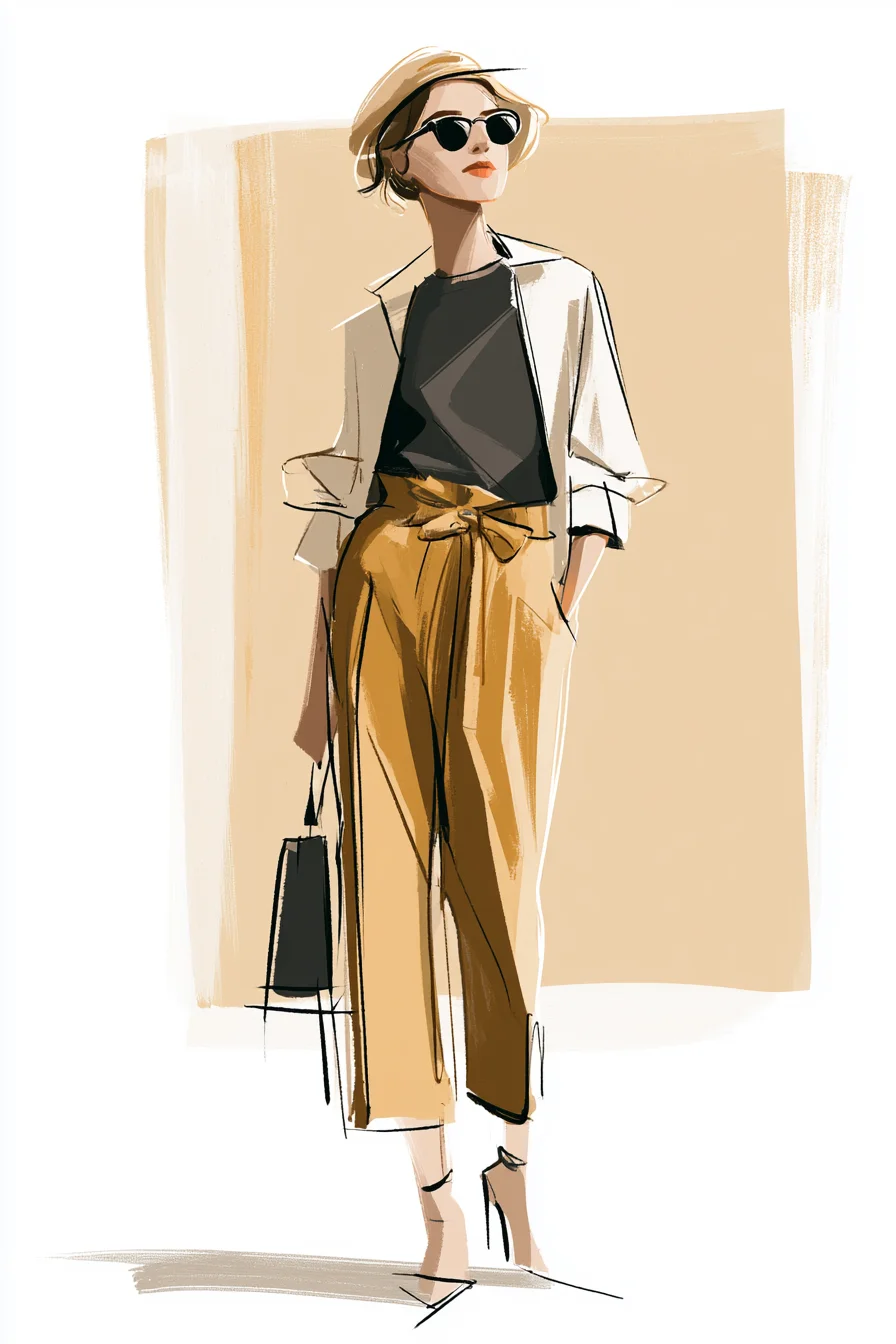
I’ve always been shit at maths. Proper shit. I’m talking my maths teacher in year 10 solemnly telling me, “Noah, I don’t think anyone’s ever scored a negative number on my test…ever.
And you have” bad at maths. Ask my friends – they’ll say no one turns to Noah when they’re struggling with fractions. It’s with this woeful lack of arithmetic ability in mind that I begin to tell you about what I like to call wardrobe mathematics.
Two years ago I downsized from a generous two-bedroom flat in Manchester to a studio flat in London that, had my ego permitted me to believe it at the time, my genitals could comfortably fit into. You haven’t lived until you’ve tried to squeeze your entire wardrobe into a cupboard the width of a twin mattress.

Needless to say my clothes storage options decreased by around 70%.
Cue life crisis.
Picture the scene: Me kneeling ankle-deep in a mountainside of clothes dumped diagonally across my bedroom floor, hysterically sobbing into a pile of oversized denim jackets. It’s not a vision of confidence.
Enter my friend James, who spotted me frolicking fantastically through my fabrics and tactfully placed a foot either side of what I’d adamantly decided to refer to as my “essential t- shirt collection”. (Reader: No one needs 27 t-shirts. No one.) “Noah, mate, you know you can’t take all of this back, right?” He asked sympathetically. The only thing I had not cried over at that point was the cold, hard maths that seemed to be mocking me from every corner of my room.
That evening I got out a notepad and did something I haven’t done since secondary school maths class: Actual maths. I wrote down every single article of clothing I owned, then started frantically attempting to work out how many outfits they could theoretically create. The result?
Embarrassing. Here I was, draping myself like a Kardashian in enough clothing to kit out half of Tammy’s Vineyard primary school and all I wore were the same seven or eight outfits on repeat. Again, not confidence.
The reason? Clothes that didn’t work together. Beautiful statement jackets that had nothing to wear them with.
Trousers that only matched one shirt. Tops that couldn’t be seen with any bottoms without looking completely ridiculous. You buy a garment because you love it.
Retail therapy is real. But somewhere along the way I’d begun buying clothes with absolutely no consideration for what I already owned. Like a magpie, I’d spotted something shiny and gone for it.
Happily, it didn’t take long to dig out the learning logic behind building a wardrobe that works (pun intended). Spend enough time thinking about it and you’ll realise that your closet is little more than a mathematical formula. Except most people approach it from the wrong direction. “ Here are ten “must-have” items that you should totally own. ” Oh great I can wear that dress to my mate’s wedding and then job interviews.” These resources are (usually) well-meaning but ignore a key element of wardrobe mathematics.
The starting point. Say you spend £100 on a killer jumper. Sure, it’s great on its own but will become infinitely better value if it teams easily with three pairs of trousers (£300), four skirts (£400), wears well with both jeans and formal wear (£600) and goes with at least 7-10 of your tops (£700-£1000).
That £100 jumper has now given you between £700 and £1,300 of wardrobe options. Multiply that by each item you own and you’ll quickly understand why someone who owns less but spends more can create more outfit options than someone who spends less but owns loads of shit they never wear. The theory is simple.
To get a better return on your clothing investment, spend more on each piece and buy things that will work with at least three items you already own. The obvious place to start with your wardrobe mathematics is bottoms. How many pairs of trousers or skirts do you actually need?
Four. Maximum. Six if you’re really pushing it.
Four to six pairs of bottoms can accommodate every eventuality in modern life. For me that’s broken down into: two pairs of jeans (one dark, one lighter) navy chinos, grey wool trousers, black trousers and a pair of smart joggers for Zoom meetings. These all work with roughly 80% of my tops – more on that later.
Notice something about those six bottoms? Math time! Six pairs of trousers x 10 tops = 60 potential outfits.
Now add in different shoes, jackets, accessories and suddenly your (relatively) small wardrobe can create hundreds of outfit combinations. Ok, so where’s the maths in that? For as long as I can remember I’ve told myself lies about my clothing. “Oh this totally goes with that shirt,” I’d say to myself while mentally living in a lie as my new top was entirely different proportions to my trousers and the colour clashed badly. “I could wear that jacket with this,” I’d think buying a brightly coloured top, only to hang both up next to each other realise they were different shades of blue.
The art of building a wardrobe that actually works is checking yourself whenever you make a new purchase. Ask yourself: Does this fit my colour palette? Will it work with at least three items I already own?
Can I picture myself wearing this with at least 3 different items right now? If you can honestly answer yes to those three questions you’re probably making a wise investment that will team effortlessly with your existing wardrobe. If not?
Consider returning it. Speaking of colour palettes… When I first started paying attention to how my wardrobe worked I assumed that having more colours gave me more outfit options. It made sense in my head.
Quick maths lesson. Let’s say you own… – 5 shirts – 5 pairs of trousers – 5 jumpers With only those three categories we already have 125 potential outfit combinations (that’s 5x5x5 if you weren’t paying attention). Now let’s say two of your shirts are red, and two of your trousers are red.
Unless you like picking out intentionally clashing colours you’re already down to 63 possible outfits because your red jumpers no longer work with those four items. Keep that in mind when building your own wardrobe maths. My personal colour palette consists of about seven colours: navy, grey, olive green, burgundy, white and denim blue.
I’ll throw in a bit of mustard or rust sometimes for variety but beyond that, pretty much everything I own comes in those shades. Neutral-heavy colours that complement each other and are all either warm or cold. Adding in coat, scarf, shoe and accessories colours I easily have 15-20 different tones in my wardrobe at any one time.
That’s plenty of variety so I never feel limited by my choices, but structured enough that literally every item works with almost everything else. Patterns are the same principle. Strictly limit the amount and types of patterns you own to stop them fighting with each other and clashing with your colours.
I have exactly three patterned shirts, all of which are predominantly made up of colours that are already in my wardrobe. They add interest to my outfits but don’t throw any mathematical wildcard into my wardrobe equations. And let’s not forget texture.
Do you notice how a lot of very stylish people wear similar or matching colours, but their clothes just look great together anyway? It’s because of the textures they pair them with. Something smooth next to something textured.
You Might Also Like

Silk with wool. Flowy with stiff. Pick clothes that not only match colour-wise but have different textures.
Even when you wear similar colours you’ll look intentional instead of sloppy. Take my favourite winter outfit. All navy.
Navy wool trousers, navy merino jumper, navy textured overcoat. Does it look intentional? Yes.
Could I have got away with wearing that in the dark? Also yes. Texture helps bring your outfit together.
Embrace it. Remember way back at the start of this article when I said my clothes storage options decreased by around 70%? I ended up getting rid of around 65% of my wardrobe.
Why did I have so much stuff I didn’t wear? Too many “one-offs.” Stuff that only worked with one other item I owned and created nowhere near enough outfits to justify the linen trousers taking up half my bloody wardrobe. I started by going through all of my tops, laying them out on my bed and playing mix & match.
Quick maths recap. 20 shirts x 6 bottoms = 120 outfits. Of those 120 combinations how many times did I actually wear each shirt?
Twice a year? Once a month? Instead of looking at each item in isolation, I made actual outfits.
Putting together trousers/shirt/jacket combos I could see myself wearing then taking a photo. It was eye-opening. You’ll notice certain items crop up again and again in your photos – those are the pieces that work with at least 3 (if not 6) of your other garments.
They’re your wardrobe workhorses that’ll see you through most occasions. Separately your wardrobe might look overwhelming. Together it’s already half-way to creating dozens of outfits.
And what about the leftovers? The shirts that only work with one or two others? Get rid of them.
This isn’t about restricting the number of clothes you own. No parenting classes required. This is about building a wardrobe that works so well you genuinely have fewer decisions to make when you get dressed in the morning.
More garments working harder = more outfit options. Sounds contradictory but trust me. If you’ve stuck with me this far you’re probably now mentally cataloguing every item of clothing as you own wondering how on Earth you’ll ever calculate yours.
The beauty is it doesn’t have to be complicated. Just focus on one section at a time. Pick a category – tops, bottoms, dresses, jackets.
Whichever. Empty them out and start making outfits. Use a notebook or Google Sheets.
Physical or digital, it doesn’t matter. The key is documenting your wardrobe maths. As you build out your inventory note how many different pieces each item works with.
Which ones overlap with others? Which only work as a standalone piece? Add in jackets, accessories, shoes.
Hell, throw in hats and scarves if you’re really feeling it. Suddenly you have a completely formula based view of your wardrobe that you can hone and improve over time. Buying anything new?
Cheque it against your list. Make sure you genuinely can wear it with at least three other things you own. Need some inspiration?
Copy and paste this handy dresser spreadsheet I built or explore some of the best closet organisation apps around. You’ll start to notice patterns. Speaking literally and figuratively.
For me the process was transformative. I literally halved my wardrobe but ended up with more than twice as many outfits I loved wearing. Is it easier buying a bunch of random clothing and calling it good?
Yes. But you’ll also wear less and stress more. Think of it as an investment in your sanity.
I can’t decide what to wear in under 30 seconds now. I don’t worry about ruining a nice shirt by wearing it to work – Since everything in my wardrobe matches everything else I know I’ll look put together no matter what. I spend about 60% less on clothes but feel like I wear everything I own.
Own less clothes that work harder and you’ll wear everything you own more often. I bet half the stuff I owned at the start of this wouldn’t pass my own maths test.
And that’ll save you money too.
Here’s a cold, hard fact.

The average pair of jeans lasts about 3 years and costs £40. That’s £1.48 per wear.
My £120 merino jumper? Heading towards 60 wears this winter. That works out at just £2 per wear.
And it’ll last me much longer. Here’s the final maths lesson. Building a wardrobe that actually works will save you money.
Start small. Work out how your wardrobe adds up. The maths doesn’t lie.