
I reach for this suit about eleven times a year, which I know because I actually tracked it last year in the same spreadsheet I use for expense reports, because that is apparently who I am now. Eleven wears, one suit, and every single time the first ten minutes of getting dressed were not about the jacket or the tie. They were about standing in front of my shoe rack having a small crisis over what goes on my feet with something that isn’t navy, isn’t gray, and does not forgive a wrong answer the way those two colors do.
Light blue is a genuinely different animal from the rest of the suiting rotation. A charcoal suit will wear black shoes and nobody blinks. A navy suit will wear brown, black, burgundy, and mostly get away with it.

Light blue is pickier. It’s a warm weather color, a lighter value color, and it photographs differently on a video call than it does under office fluorescents, something I only learned after a client meeting where my suit read almost gray on screen and my black oxfords read like I was headed to a funeral directly afterward. Nobody said anything. I noticed anyway. I always notice.
The first time I wore this suit, three years ago now, I put on black shoes because that is what my brain defaults to for anything resembling a suit, the same way I default to an index fund when I don’t want to think too hard about a decision. It wasn’t wrong exactly. It just looked like I’d gotten dressed by committee, like two different outfits that had been merged in a systems error. My manager, who has never once complimented anything I wear, looked at my feet that day and said “interesting choice,” which from her is basically a formal write up.
So I did what I do with everything that costs more than sixty dollars, which is build an actual case for it. Cost per wear against a suit I wear eleven times a year, color pairings that would extend its range instead of narrowing it, and a hard look at which shoes I already owned versus which ones I was inventing excuses to buy. What came out of that exercise is basically this article, five answers ranging from the one that will never embarrass you to the one that will, on the wrong day, embarrass you slightly, but in a good way.
[Light Blue Suit Shoes]
Brown Leather Shoes
Start here if you start anywhere. Brown is to a light blue suit what a plain white shirt is to basically anything, the answer that works before you’ve had your coffee and thought about it properly. A mid brown oxford or a cap toe derby sits close enough to the suit in warmth and far enough from it in tone that the outfit reads as put together rather than matched, which matters more than people think. Matched is what happens when your tie is the exact same blue as your suit. Nobody wants matched.
I own three pairs of brown dress shoes at this point, which felt like at least one too many until I actually laid them side by side and realized they’re doing three different jobs. A chestnut cap toe for client meetings, a darker, almost tobacco brown pair for anything with a tan or gray secondary color, and a pair of brown suede loafers that I’ll get to in a minute because they deserve their own section, not a mention here.
The case for brown is basically the case for a bond fund. It’s not exciting, it’s not going to be the thing anyone remembers about your outfit, and that’s precisely the point. On a nine hour day that included a client call, a fire drill involving a spreadsheet that wouldn’t reconcile, and a train ride home in July heat that would have destroyed suede, my chestnut oxfords looked exactly the same at hour nine as they did at hour one. That’s the entire pitch. Reliability, not romance.
Where it goes wrong is when the brown skews too orange or too light against a suit that’s already pale. Cognac against light blue can start looking like a costume rather than an outfit, which brings me, conveniently, to the next section, because that line is thinner than I expected.
[Brown Leather Shoes]
Tan and Cognac Loafers
Here’s where I have to admit I got this wrong for an embarrassingly long time. I treated tan and cognac as basically interchangeable with brown, same drawer, same mental category, until a friend of mine, someone who works in a genuinely more stylish industry than finance, saw a photo of me in cognac loafers with this suit and said, flatly, “that’s a warm weather outfit and you’re wearing it like it’s a courtroom.” She was right, and I hated that she was right.
Tan and cognac loafers are not a downgrade from brown oxfords, they’re a completely different proposition. They’re the unlined jacket of the shoe world, the thing you wear when the occasion has already told you it’s not that serious. A light blue suit with no tie, sleeves not rolled but clearly rollable, cognac penny loafers, no socks or close to it. That’s a Saturday wedding outfit, a rooftop thing, a summer Friday when the office has quietly stopped pretending anyone’s doing real work after 2pm.
The specific mistake I made was wearing this exact combination to an actual Tuesday client meeting, indoors, air conditioned, nothing casual about it. On paper it was the same suit, same shoe family as the brown oxfords I’d wear any other day, so I assumed it would read the same. It didn’t. It read like I’d mixed up my calendar. The client didn’t say anything. I know because I checked my own reflection in the elevator glass on the way out and thought, correctly, that I looked like I was on my way somewhere with a pool.
Save these for when the suit itself has already been dressed down. They’re one of the best combinations on this list. They’re also the easiest one to deploy in the wrong room.
[Tan and Cognac Loafers]
You Might Also Like

White Sneakers
I resisted this pairing for longer than I’ll admit, mostly because “suit with sneakers” sounded, to my particular brain, like the fashion equivalent of a startup with no revenue model, a lot of confidence and not much underneath it. Then I actually needed to wear this suit to something that involved standing on concrete for four hours, a friend’s outdoor engagement thing, and my options were dress shoes that would destroy my feet or a leap of faith.
Clean white leather sneakers, minimal branding, no chunky sole, worked better than I expected and better than the brown oxfords would have on that particular day. The trick, and I mean the entire trick, is that the sneaker has to look deliberate rather than like you ran out of time to change. A beat up pair from your gym bag reads as an accident. A crisp, structurally simple white sneaker reads as a choice, and light blue is one of the few suit colors relaxed enough to let that choice land properly.
This is a weekend answer, a warm climate answer, not an office answer, and I want to be specific about that because I’ve seen the version of this go wrong in a conference room and it’s not a good look, it reads like you’re dressed for two different jobs simultaneously. But for a daytime event, a graduation, a casual wedding with no dress code printed on the invitation, it’s the pairing that gets the most unsolicited comments, all of them from people who clearly weren’t expecting a suit to look that unbothered.
Six hours into that engagement party, standing the entire time, my feet were fine and the sneakers still looked white, not gray, which given the venue was mostly gravel is a higher bar than it sounds.
[White Sneakers]
Navy Shoes
Nobody asks about navy shoes and I genuinely don’t understand why, because tonal dressing, doing two shades of the same color family in one outfit, is one of the more sophisticated moves available here and almost nobody brings it up. A navy suede loafer or a navy cap toe against a light blue suit isn’t matching, it’s the same principle as wearing a navy tie with a navy suit done well, contrast in shade rather than in color, and it photographs, which matters to me more than it probably should, unusually well on camera.
I bought a pair of navy suede derbies almost by accident, they were on a discount rack and I told myself I’d find a use for them eventually, the retail equivalent of buying a stock because it was cheap rather than because I’d done any research. They sat in the box for four months. Then I wore them with this suit to a dinner and the woman two seats over asked where they were from, which has never once happened with my brown pairs, not once in three years.
The risk with navy is texture, not color. A navy shoe that’s too shiny, too formal, starts competing with the suit instead of complementing it, especially indoors under warm light. Suede solves this almost entirely, it mutes the shine and lets the tonal thing read as intentional rather than like you grabbed the wrong shoe in a dark closet. Smooth navy leather can work too, but it’s a narrower window, better for evening than for a 9am meeting where you need the outfit to read instantly rather than reward a second look.
[Navy Shoes]
Burgundy and Oxblood Shoes
This is the one I’d never have tried without a wedding forcing my hand. Burgundy against light blue sits in genuinely bold territory, warm dark red next to a cool pale blue, and the case for it isn’t cost per wear or reliability, it’s the opposite of everything I usually argue for. I bought oxblood cap toes for one specific wedding, did the math on how often I’d actually wear them again, and the honest answer was maybe three times a year, which by my usual standards is a bad investment. I bought them anyway.
The reason it works, when it works, is contrast done with intent rather than accident. Burgundy has enough brown underneath the red to still feel connected to the classic shoe colors, so it doesn’t read as costume the way, say, a bright color might. But it’s got enough color in it that against a pale suit, it becomes the thing people notice, in a good way, at a wedding, at an evening event, somewhere the whole point is to look slightly more done up than a Tuesday allows.
Where I’d stop myself is the office. I tried it once for an internal presentation, told myself the shoes were subtle enough, and caught my own reflection in the conference room window looking like I was overdressed for a meeting about a budget variance. They weren’t wrong shoes. They were the wrong room. Save burgundy for when the room already knows it’s a special occasion, and let it be the one loud decision in an otherwise controlled outfit.
[Burgundy and Oxblood Shoes]
Final Thoughts
If I’m being honest about the spreadsheet I mentioned at the start, the actual answer to what color shoes with a light blue suit isn’t one color, it’s a decision tree with the occasion at the top of it, not the shoe.
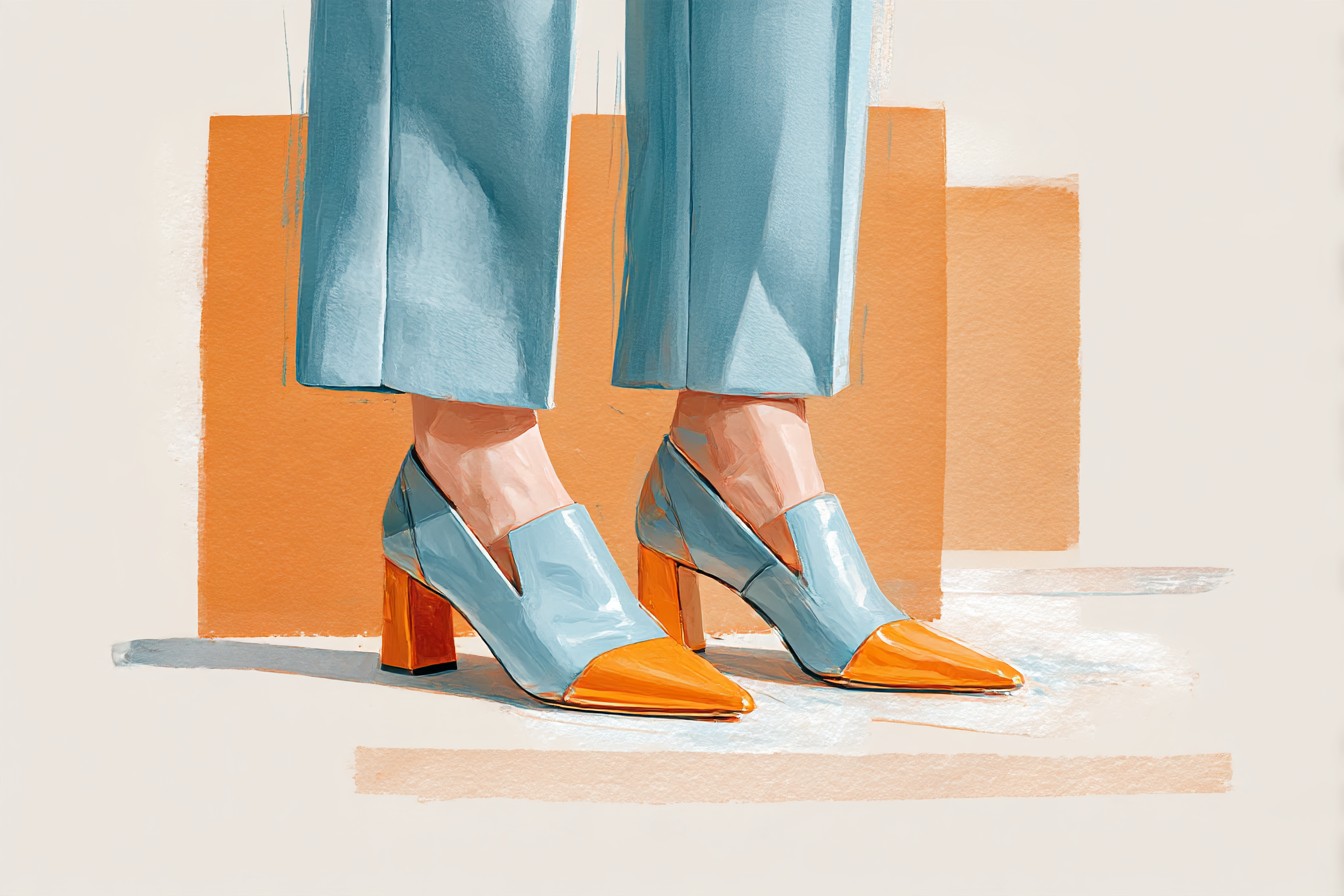
Brown for the day you don’t want to think about it. Tan or cognac for the day the suit is already doing less work. White sneakers for concrete and daylight. Navy for the meal where you want someone to ask where you got them. Burgundy for the one night a year that’s actually asking for it.
What I’ve unlearned, slowly and more expensively than I’d like, is the instinct to reach for black first just because it’s the safe answer for every other suit I own. It isn’t safe here. It’s just familiar, and those aren’t the same thing, a distinction that took me an embarrassing number of wears to actually believe.


