
I own four pairs of blue chinos in three different shades, and if I’m honest about it, they get worn something like three times a week on average, more in the shoulder seasons when I can’t decide between smart and lazy. That’s not a humble brag about my wardrobe discipline, it’s just the maths of owning trousers that go with almost everything I already had before I bought them. Blue chinos are the trousers I reach for when I’ve got fifteen minutes to get dressed and I don’t want to think too hard, and yet somehow they still end up looking like I thought about it. That’s the trick of them, and it’s also where people get stuck.
I say this because I get asked about blue chinos more than any other single item I own, usually by people who’ve bought a pair on the strength of a good review or a mannequin in a shop window, worn them once with the wrong shoes, and quietly shelved them. A colleague of mine, Marcus, did exactly this.
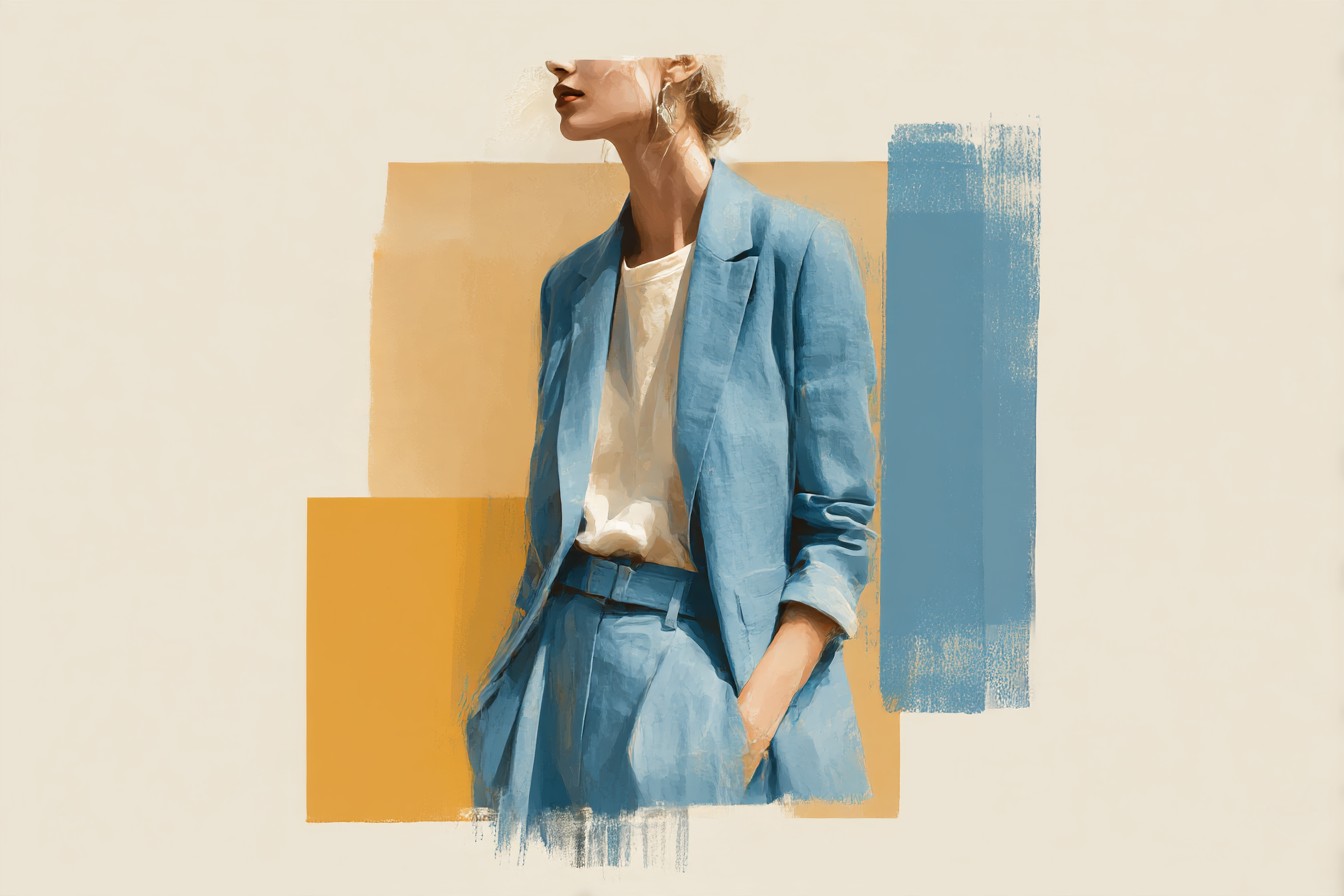
He turned up in a pair of mid blue chinos and chunky white trainers that made the whole look tip over into “off duty PE teacher,” and he genuinely thought the trousers were the problem. They weren’t. The trousers are rarely the problem. It’s what sits above and below them that decides whether you look put together or like you got dressed in the dark.
What makes blue chinos trickier than, say, khaki or stone is the color itself. Blue is doing a job that neutral tones don’t have to do. It’s got warmth and coolness in it depending on the shade, it can read as smart or completely relaxed depending on the weave and the cut, and it changes character entirely depending on what you put with it. Navy chinos behave almost like a neutral. A washed out sky blue behaves more like a statement, closer to color than to base layer. Treat every pair of blue chinos the same and you’ll end up either overdressed for a Tuesday or underdressed for dinner.
So this is me working through what actually goes with blue chinos, the shoes, the shirts, the blazers, the jackets, the knitwear, and the wider color logic, based on what’s actually hung in my wardrobe and been proven right or wrong on an actual body in actual weather, not on a hanger under shop lighting.
[Blue Chinos]
What Shoes to Wear With Blue Chinos
Footwear is where blue chinos either earn their keep or get dragged down, and I think it’s the single decision that matters most. My rule of thumb, built on several wrong turns, is that blue chinos want either something with texture and a bit of formality, like a brown suede loafer or derby, or something genuinely casual and worn in, like a white leather sneaker that’s already lost its showroom shine. What they don’t want is the middle ground of a clean, brand new, glossy trainer, which is exactly what Marcus had on and exactly why it read as mismatched. New white trainers with chinos look like a costume. Broken in ones look like a choice.
Brown suede is the one I come back to constantly, particularly a mid brown or tan derby, because it picks up the warmth in navy or mid blue chinos without fighting them. I’ve got a pair of chestnut suede loafers that have done more work with blue chinos than almost anything else in my shoe rack, worn sockless in summer with a linen shirt, worn with thin navy socks in the cooler months under a jacket.
Black shoes are the contested territory. I know plenty of people who wear black leather with navy chino and it works fine in a very neat, businesslike way, but with a lighter or brighter blue it can look heavier than the trousers can support. Boots earn their place in autumn, a suede chukka boot in a tobacco or dark olive tone does more for blue chinos than most people expect, adding weight down at the ankle that balances a lighter jacket up top.
[Blue Chino Footwear]
What Shirt to Wear With Blue Chinos
Shirts are where I’ve made my most instructive mistakes, mostly around pattern clashing that I thought was clever at the time and wasn’t. A tight gingham shirt with mid blue chinos, worn once to a barbecue, taught me that two competing patterns in similar tones just blur into visual static from three feet away. Nobody said anything, but I’ve got the photos, and they’re not flattering.
What actually works, consistently, is contrast in tone rather than pattern. White is the obvious one and it earns its reputation, a crisp white oxford with navy chinos is close to foolproof, but I’d argue an off white or ecru does more interesting work, softer against the blue rather than snapping against it. Pale pink is the one people are always surprised by until they try it, a dusty pink or blush shirt against navy or a deeper blue chino has a slightly old money quality that I didn’t expect to like as much as I do.
For pattern, thin stripes beat checks nearly every time with blue chinos, because a narrow stripe reads as texture from a distance rather than competing shape. A denim shirt is the other one worth mentioning, tonal denim on denim adjacent blue chino can look intentional rather than accidental, provided the two blues aren’t identical, some visible difference in wash keeps it from looking like a boiler suit.
[Blue Chino Shirts]
What Blazer to Wear With Blue Chinos
The blazer question comes up constantly because blue chinos sit in that useful gap between trouser and jean, smart enough to take a blazer without looking like you’re trying too hard, casual enough that a full suit would be overkill. I own a navy blazer that I bought thinking it would be the obvious pairing with navy chinos, and it’s fine, but it’s also the least interesting combination I own, navy on navy reads a little flat unless the fabrics contrast, one matte and one with a slight sheen or texture.
The blazer that’s earned its keep more is a mid grey one in a soft flannel, worn with navy chinos, a white shirt, and brown shoes, which has covered everything from a work dinner to a wedding where I didn’t want to be in a full suit. Grey against blue is quietly one of the best combinations going, low contrast enough to look considered rather than clashing.
Where I’d push people to be braver is with a checked or subtly patterned blazer, a muted brown or olive windowpane check, worn over a plain blue chino, because the chino’s solid color gives the pattern somewhere to land without the whole outfit turning busy. Just avoid two patterns fighting each other, that lesson from the gingham shirt applies here too.
You Might Also Like

[Blue Chino Blazers]
What Jacket to Wear With Blue Chinos
Blazers are the smart end, but jackets are where blue chinos really flex, because this is the category that decides whether the whole outfit leans toward weekend or toward something you’d wear to an office that doesn’t require a tie. A field jacket in olive or khaki cotton, the kind with the four patch pockets and a slightly worn in look, is one of my most reached for pairings, especially with a lighter blue chino, because the olive settles the blue down and stops it looking too clean.
Denim jackets are trickier and I’d only recommend them with a chino that’s noticeably lighter or darker than the jacket wash, otherwise you’re back in that boiler suit territory. A mid indigo denim jacket over a pale, almost washed out blue chino works because there’s enough daylight between the two tones.
For colder months, a navy or charcoal wool overcoat does the sensible, elegant thing over blue chinos, particularly navy ones, essentially extending the leg line in one continuous cool tone. I’d steer away from bright, technical shell jackets here, the sporty finish tends to fight the slightly dressed up nature of a chino rather than complementing it, no matter how good the jacket looks on its own.
[Blue Chino Jackets]
Knitwear That Actually Earns Its Place
I underrated knitwear with chinos for years, treating it as an afterthought layer for cold mornings rather than a proper styling decision, until a mustard crew neck jumper I’d almost given away turned out to be the best thing I own for navy chinos on a weekend. Mustard, rust, and burnt orange all sit beautifully against blue, warm tones against cool, and they do something a plain grey or navy jumper simply can’t.
That said, grey marl knitwear still has its place, particularly a fine gauge merino crew neck worn under the flannel blazer I mentioned earlier, because it keeps the whole look monochrome and considered rather than busy. Cable knits in cream or oatmeal are the other one worth calling out, especially with a mid blue chino in cooler weather, there’s a slightly coastal, off duty energy to it that a smooth cotton jumper doesn’t quite manage.
Where I’d caution people is with anything too fitted or too shiny, a slim merino polo neck can tip a blue chino outfit toward looking like you’re trying to dress like someone from a menswear catalog rather than someone getting dressed for their own life. Texture over sheen, every time, with this particular trouser.
[Blue Chino Knitwear]
What Colors Actually Go With Blue Chinos
Pulling all of this together, if there’s one thing I’d want someone to walk away understanding, it’s that blue chinos are far more color flexible than people give them credit for, provided you respect the temperature of the blue you’re working with. Warm accents, mustard, rust, tan, burnt orange, camel, all flatter blue because they sit opposite it, and I lean on this constantly when I want an outfit to feel deliberate rather than default.
Cool neutrals, white, grey, and stone, are the safe, reliable end of the spectrum, and there’s nothing wrong with reaching for them on a day you don’t want to think about it, but they won’t ever surprise anyone.

Pink, as mentioned earlier with shirts, is the one I’d genuinely encourage people to try before dismissing, it reads far more grown up against blue chino than it sounds on paper.
The one color family I’d actually caution against is bright, saturated green or purple worn head to top with blue chinos, both can look costume like rather than considered unless used sparingly, a small amount in a tie or a pair of socks rather than a full jumper or jacket. Blue chinos want a partner color, not a competitor.
[Blue Chino Color Pairings]
Final Thoughts
If I’ve learned anything from three years of wearing blue chinos more often than any other trouser I own, it’s that the trousers themselves are rarely where things go wrong. It’s the shoe that’s too new, the shirt pattern that’s fighting rather than complementing, the blazer that matches too closely instead of contrasting, that quietly derails an outfit that had every chance of working. Blue chinos are patient, forgiving trousers, but they do reward a little bit of thought about temperature, texture, and tone rather than just grabbing whatever’s clean.
What I’d actually leave someone with is this: buy your blue chinos in at least two shades if you can, a proper navy for the days you want something close to a neutral, and a lighter mid blue for days you want the trouser itself to do some of the talking. Then build outward from there, warm shoes, a shirt with some tonal contrast, a jacket that either settles the blue down or lifts it, depending on the day. It’s a small trouser to get this much mileage from, but that’s exactly why I keep reaching for it, three times a week, without really having to think about it anymore.


[…] eyes on your print, not “oh no not those hideous curtains AGAIN.” Tip: Throw it on with flat shoes and a blazer for daytime or […]
[…] is the safe choice, blue is the one that actually gets worn the most, and for good reason. A pale blue shirt against a lighter gray suit has become my default for anything that needs to look put together but not stiff, and it […]