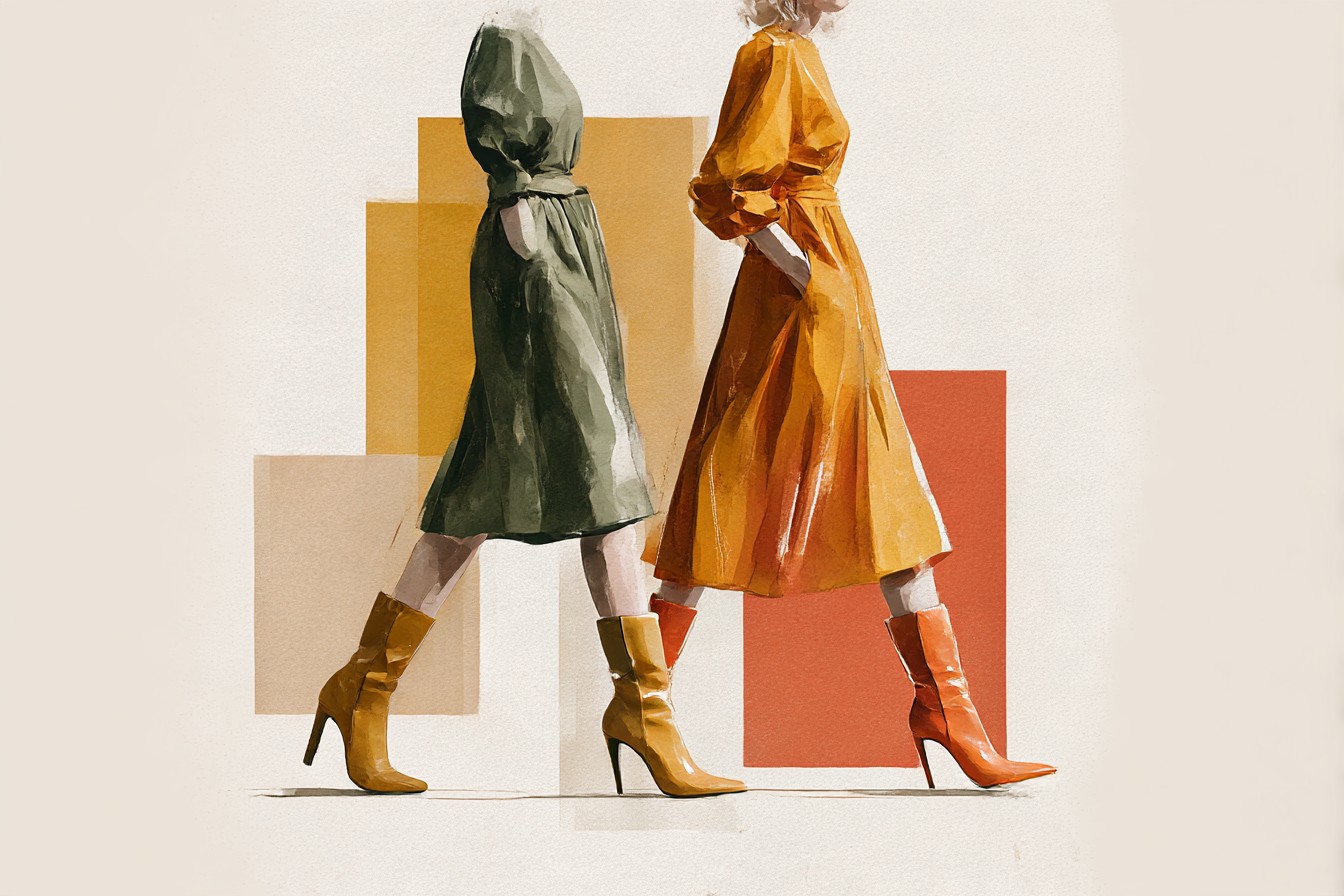
I counted the other day, out of pure boredom during a long commute, and it turns out eleven of the last thirty days I wore a midi dress. Not because I planned some capsule wardrobe experiment. Just because it kept being the easiest right answer to “what do I put on today” when I had a work call, a lunch, a school pickup, and dinner with people I hadn’t seen in months, all crammed into one day with zero time to change outfits between them. That’s the whole case for the midi dress in one sentence: it stretches from one context to another better than almost anything else in my closet, provided I get the shoes and the layers right. And that “provided” is doing a lot of work.
Because here’s what nobody tells you when you buy your first midi dress off a rack that made it look effortless on a mannequin: the dress itself is maybe sixty percent of the outfit.

The other forty percent is what’s on your feet and what’s over your shoulders, and that forty percent is where most of us get it wrong at least once. I have worn a floral midi with white sneakers to a baby shower and felt perfectly dressed, then worn the same dress with the wrong flat sandals to a slightly nicer dinner and felt like I’d shown up in pajamas. Same dress. Completely different verdict from the room, and from me in the mirror.
My sister figured this out before I did, actually. She has one rust colored midi dress she has owned for maybe four years now, and I have watched her wear it to a farmers market with sneakers and a denim jacket, then wear it three days later to a work event with block heels and a blazer, and both times she looked like she meant it. That’s the skill. Not owning six different midi dresses for six different occasions, but knowing what to put around the one dress you already trust.
So this is really an article about shoes and layers wearing a midi dress article’s clothes, if that makes sense. I want to walk through the specific pairings I keep coming back to, the ones that have earned their place through repetition rather than a single good outing, and be honest about where each one works and where it quietly falls apart.
[Midi Dress Outfits]
Sneakers and Flat Shoes for the Everyday Midi
Let’s start with the pairing I lean on most, because it’s the one that gets a midi dress out of the “special occasion” pile and into regular weekly rotation. White sneakers under a midi dress is not a groundbreaking idea at this point, I know, but there’s a reason it hasn’t gone away. It takes a dress that could read as fussy or overly finished and grounds it, makes it look like something you threw on rather than something you assembled.
The detail that actually matters here is the hem. A midi that hits right at the ankle bone tends to fight with sneakers, it creates this awkward line where the shoe and the hem are competing for the same real estate. The ones that work best sit a couple inches above that, or well below it, brushing closer to the top of the foot so the sneaker has room to read as a full shoe rather than a sock peeking out.
I’ve also had good luck with a pointed flat, the kind with almost no arch and a slightly elongated toe, especially on a knit midi dress. It reads dressier than a sneaker without asking for any effort, which matters on the days when heels are simply not happening, whether that’s because of a full day on my feet or a toddler who needs chasing at some point before noon. A ballet flat works too, though I’ll admit it can tip a dress into looking a bit younger or more casual than intended, so I save those for weekend versions rather than anything office adjacent.
Where this pairing falls apart is length mismatch and fabric mismatch together. A slippery, slinky midi with sneakers underneath can look like a mistake rather than a choice, like the outfit doesn’t know what decade it’s from. Structured cotton, denim style midi dresses, anything with a bit of body to the fabric, those are the ones that take sneakers well.
[Sneakers and Flat Shoes]
Boots, From Ankle to Knee High
Boots are where midi dresses genuinely earn their keep for about half the year, because this is the pairing that makes a midi dress function as a cold weather piece instead of something you retire the second temperatures drop. Ankle boots under a midi dress is the workhorse combination, and it’s forgiving in a way I didn’t expect the first time I tried it. There’s a visible strip of leg between the hem and the boot shaft, and that gap does something flattering almost regardless of the boot style, whether it’s a stacked heel bootie or something flatter and more utilitarian with laces.
Tall boots are trickier and I say that as someone who owns three pairs and only reaches for one of them with dresses. The knee high boot needs a slimmer, less voluminous midi to look intentional, because if the dress has any real fullness to the skirt, the boot ends up looking swallowed rather than incorporated. I made this mistake with a corduroy midi that had a fair amount of flare to it, paired with knee high boots, and the outcome was less “chic layered look” and more “shape I can’t quite explain.” Swapped the boots for ankle boots the next time I wore that dress and it clicked instantly.
Combat style boots under a midi dress deserve a mention too, mostly because they solve the problem of a dress reading too sweet or too polished for how you actually feel that day. Chunky lug sole boots under a soft floral midi is one of those contrasts that works precisely because it isn’t trying to match, it’s trying to undercut. I wear that combination when I want the dress but not the vibe the dress implies on its own.
[Boots for Midi Dresses]
Heels, and Knowing Which Kind
Heels are where midi dress outfits go from practical to intentional, the pairing you reach for when the occasion actually calls for looking put together rather than just presentable. But not all heels do the same job here, and this is the section where I’ve made the most expensive mistakes, because heels are rarely a casual purchase.
A block heel is the safest starting point if you’re building this pairing for the first time. It gives you height and polish without the instability of a thin stiletto, which matters more than people admit when you’re also managing a dress with movement, especially anything with a swing to the skirt or a wrap style that needs a hand free. I wore stiletto sandals with a wrap midi to an outdoor wedding once, and between the grass and the fabric wanting to open at the wrong moment, I spent the whole ceremony more focused on damage control than on the vows.
You Might Also Like

A pointed toe heel, closed or open depending on season, is the pairing I reach for with anything button front or shirt style, because the sharper toe balances out a dress silhouette that can otherwise look a little soft or shapeless. Strappy sandal heels earn their place with slip style midi dresses specifically, satin, silky, bias cut, the kind of dress that already reads evening, where a strappy heel continues that same delicate line rather than interrupting it with something clunkier.
The general rule I’ve landed on, after enough trial and error, is that the heel should either match the formality the dress is already implying or intentionally undercut it, never accidentally undercut it. A stiletto with a very casual jersey midi doesn’t read as dressed up, it just reads confused.
[Heels for Midi Dresses]
Cardigans for the In-Between Days
Somewhere between “needs a jacket” and “fine on its own,” there’s a huge stretch of weather and occasion that a cardigan handles better than anything else, and midi dresses spend a lot of time in exactly that zone. A long, open front cardigan over a fitted midi dress is one of my most reached for combinations for the office specifically, because it adds coverage and a bit of structure without changing the shape of the dress underneath.
Fine gauge cardigans, the thin knit kind rather than the chunky cabled ones, are the better match for most midi dresses because bulk at the shoulders and cuffs fights with a fitted bodice. I learned this the hard way with a heavier cardigan over a ribbed midi, the combination just added width in places that didn’t need it. Switched to a lightweight cotton cardigan in the same color family and the whole outfit looked considered instead of accidental.
Cropped cardigans deserve a specific mention too, because they solve a problem longer cardigans can create, which is visually cutting a midi dress in half at an unflattering point. A cropped cardigan that hits above the natural waist keeps the eye moving down the length of the dress rather than stopping partway, which matters more on dresses with a defined waistline than on looser, shift style ones.
Color is where I’ve had the most fun with this pairing honestly. A neutral cardigan over a patterned midi dress calms the whole look down for daytime, while a bold colored cardigan, mustard, deep green, rust, over a plain midi dress does the opposite job, giving a simple dress a reason to be memorable. Both directions work, it just depends what you want doing the talking.
[Cardigans for Midi Dresses]
Jackets and Blazers for Structure
When a cardigan feels too soft for what the day requires, a jacket is the move, and this is the layer that changes a midi dress’s entire personality faster than anything else on this list. A blazer over a midi dress, particularly a slightly oversized one left open rather than buttoned, takes almost any dress into meeting appropriate territory, which has saved me more than once on mornings when I got dressed for one version of the day and then got a calendar invite for something else entirely.
Denim jackets over midi dresses are the daytime, off duty version of the same idea. This pairing works best when the dress has some polish to begin with, a slip style or a shirt dress, because the denim jacket then reads as an intentional contrast rather than just something grabbed for warmth. I’ve paired a denim jacket with a floral midi so often at this point that the two have basically become one outfit in my head, I don’t think of them separately anymore.
Leather jackets deserve their own mention because they do something a blazer can’t, which is add a bit of edge to a dress that might otherwise read as too sweet or too safe.

A cropped leather jacket over a floral or pastel midi dress is one of those combinations that photographs well precisely because the two pieces are pulling in different directions, feminine dress, tougher jacket, and somehow landing somewhere better than either would alone.
Trench coats belong here too, specifically for transitional weather, since a midi dress under an open trench with boots underneath is one of the few outfits that looks equally right for a work day and a weekend errand run, which is exactly the kind of flexibility that makes this whole category worth investing in.
[Jackets for Midi Dresses]
Final Thoughts
If there’s one thing I’d want someone to take from all of this, it’s that a midi dress is rarely the finished outfit on its own, and that’s not a flaw, it’s actually the appeal. It’s a piece built to be finished by whatever you put around it, which means the same dress can genuinely serve a farmers market, an office, and a dinner out, provided you’re willing to think about the shoes and the layer for a few extra seconds before you walk out the door.
I don’t think there’s one correct pairing here, despite how confidently I’ve talked about hems and heel shapes for the last several sections. What I’ve landed on is more like a set of instincts built from wearing the wrong thing enough times to notice a pattern. Sneakers for ease, boots for the cold months, heels when the occasion asks for it, a cardigan for the in between days, a jacket when I need the outfit to hold its shape through a full day of context switching.
Eleven days out of the last thirty, and I don’t see that number going down anytime soon. If anything, the more I’ve paid attention to what goes under and over the dress rather than just the dress itself, the more often it’s become the answer to a rushed morning rather than a special occasion piece I save for the few days that call for it.


[…] in a video that’s been viewed 1.2 million times. She’s wearing an oatmeal-coloured midi dress with a Peter Pan collar, puffy sleeves, and a white apron. She pairs it with black tights, lace-up […]
[…] sneakers get more forgiveness than I expected them to. A midi dress with a slightly heavy hem sits fine over a thicker sole because there’s enough fabric weight […]